 14 May 2026
The poultry industry is expected to continuously play a vital role in food security in Asia, particularly amid the current global uncertainties.
According to Lau Chia Nguang, Leong Hup International Executive Chairman, poultry remains one of the most affordable and widely consumed protein sources in the region, and its growth is mainly supported by population growth and higher disposable income.
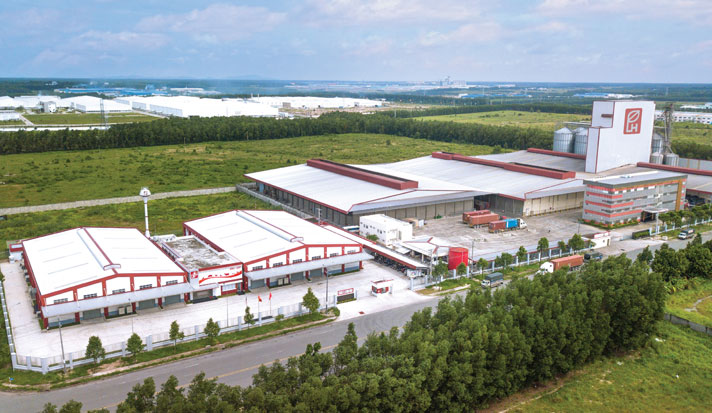
Leong Hup International operates in Malaysia, Vietnam, Singapore, Indonesia and the Philippines.
Mr Lau said in Leong Hup’s latest 2025 annual report that the group has strengthened its ‘farm-to-plate’ integrated business operations – and in doing that, managed costs more effectively while maintaining standards.
“Our key strategic initiatives include driving cost efficiency, enhancing resource allocation, strengthening financial excellence, driving organic growth in all key markets, growing downstream operations and developing organisational capability,” he explained as quoted by The Star.
Strengthening procurement strategy
Mr Lau added that the cost environment for feed ingredients showed improvement, as prices for corn and soybean meal eased following stronger harvests in major producing regions, including the US, Brazil and Argentina.

“Improved crop yields helped alleviate the supply constraints, and internally, our feed mill operations continued to strengthen its procurement strategy and optimize feed formulations to enhance cost efficiency,” he revealed.
However, Leong Hup International was impacted by the fluctuations in foreign currency, despite the ringgit appreciating against the US dollar and other currencies in the region.
Mr Lau explained that while the strengthened ringgit helped lower the cost of imported feed ingredients locally, it also created currency translation effects when consolidating the financial performance of the group’s overseas operations into the ringgit.
“As a result, reported revenue and earnings from certain regional markets were impacted, particularly during the later part of the year,” he said.
Indonesia remains the biggest contributor
Indonesia remained Leong Hup International’s biggest contributor to its top line at around USD 841 million, followed by Malaysia at around USD 586 million, Vietnam at around USD 408 million, Singapore at around USD 207 million and the Philippines at around USD 201 million.
Economic growth across the region Leong Hup International operates in was broadly resilient – Malaysia economy expanded by 5.2% last year while Indonesia recorded gross domestic product growth of 5.1%.
Vietnam achieved the strongest economic expansion in Southeast Asia at 8.0%, up from 7.1%.
Earnings in 2025
As for the group’s earnings, it posted a profit of around USD 46 million on the back of a revenue of around USD 578 million for the fourth quarter ended December 31, 2025.
For its financial year 2025 (FY25), its topline was lower at around USD 2.2 billion compared to around USD 2.4 billion in FY24, this is largely attributed to lower revenue contributions from the livestock and poultry-related products and feed mill divisions.
Its profit though was 16.3% higher at around USD 128 million, compared to around USD 109 million in FY24.
Earnings per share were higher at 19.5% at 14.04 sen (MYR), compared to 11.75 sen in FY24.
Mr Lau added the group’s net debt dropped to around USD 222 million, as opposed to around USD 311 million in FY24.
“Consequently, the net gearing ratio improved to 0.24 times, compared to 0.37 times in the previous year, as we continued to focus on prudent and efficient cash flow management,” he said.

Subscribe now to the technical magazine of animal nutrition
AUTHORS
From 2025 Data to 2026 Decisions: Managing Mycotoxin Risk in a Changing Climate
Alterion® NE Celebrates 10 Years of Poultry Gut Health Innovation
The Science Behind Kolin Plus: Beyond Choline Replacement
Summer Infertility in Sows: Managing Heat Stress and Reproductive Performance
AO-Biotics® Amaferm®: Supporting Livestock Digestion and Performance

Interview with Güner Gövenç
Güner Gövenç,
Net Energy and Precision Feeding Shape the Future of Poultry Nutrition
Edgar Oviedo
Mycotoxins in Swine: Health Risks and Nutritional Solutions
Giuseppe Carcò
Mycotoxins and Piglet Ear Necrosis: Cause, Cofactor or Coincidence?
Alberto Morillo
How Mycotoxins Affect Intestinal Health in Pigs and Poultry
Marcos Rostagno
From Antibiotics to Functional Feeds in Aquaculture
Babatunde Saliu
Peas as an Alternative to Soybean Meal in Beef Cattle Finishing Diets
Daniel Villalba Mata,
Improving Egg Yolk Pigmentation Through Better Nutrient Transport

Aquaculture and Aquaponics Nutrition: How Fish Shape the Growth of Greens
Trenton Corby
Consistency in Soybean Meal Drives Performance and Sustainability