 01 Sep 2026
By Dr Mukti Sadhan Basu
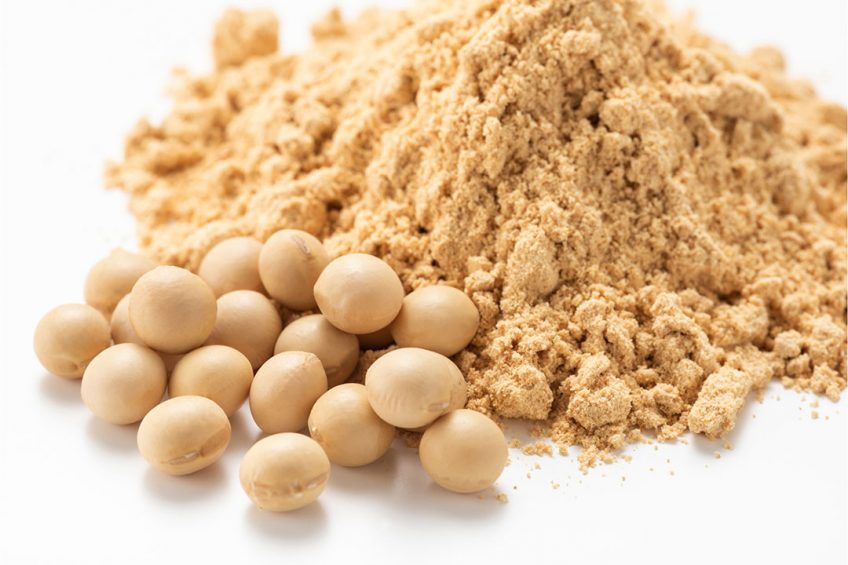
India’s poultry, dairy and aquaculture industries are living through an uncomfortable squeeze. Soybean meal, the single most reliable protein source in Indian feed formulations, has become scarce and expensive at the same time. For a hatchery manager or a feed miller working on thin margins, that combination is not an abstract policy debate. It shows up directly in the cost of a bag of feed and, eventually, in the price of eggs, broiler meat and milk on a family’s table.
The instinctive response to a shortage is to look outward, and India does have the option of importing genetically modified (GM) soybean or soybean meal to plug the gap quickly. But the real question is not whether GM imports can help in the short term. They almost certainly can.
The question is what happens if a temporary fix quietly becomes a permanent habit. If India keeps reaching for the cheapest imported soybean meal every time domestic supply tightens, instead of fixing why domestic supply keeps tightening, the country risks trading a feed shortage for something harder to reverse: a structural dependence on foreign soybean and on global commodity cycles that India cannot control.


Protecting the farmer while imports fill the gap
Any import policy has to start by asking who bears the cost. If cheap GM soybean meal lands in Indian ports just as domestic farmers are harvesting their own crop, it is the Indian soybean grower who absorbs the price shock, not the importer. That timing problem deserves a specific fix rather than a blanket import rule.
A trigger-price mechanism, where imports are permitted only when domestic soybean and soybean meal prices cross a defined threshold, would let feed manufacturers access affordable protein during genuine shortages without flooding the market when Indian farmers are trying to sell their own harvest.



Pairing that with a variable tariff or safeguard duty, rather than a flat low import tax, gives policymakers a lever they can adjust as conditions change, instead of a fixed rate that either overprotects farmers in good years or exposes them in bad ones. This is the kind of policy plumbing that rarely makes headlines but decides, in practice, whether a farmer plants soybean again next season.
Soybean meal does not have to be the only answer
Even with sensible import rules, India does not need to solve its protein gap by leaning on one ingredient. Feed formulation has moved well past the assumption that soybean meal is irreplaceable. Maize and rice DDGS, sunflower meal, rapeseed meal, de-oiled rice bran, selected pulse meals, groundnut cake, cottonseed meal and properly processed fishmeal can all contribute to the protein basket when combined thoughtfully.
What makes this workable is not simply substitution but formulation science: balancing digestible amino acids across ingredients, using enzyme technology to unlock nutrients that would otherwise pass through unused, and running least-cost formulation models that adjust the mix as raw material prices shift.
A feed mill that builds this flexibility into its formulation practice is far less exposed the next time any single ingredient, soybean meal included, runs short or spikes in price.
Closing the yield gap at home
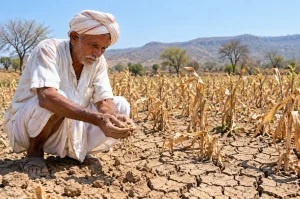
None of this addresses the more fundamental problem: India’s own soybean yields are stuck. At around 1 ton/ha, they sit well below the global average of roughly 2.8 tons/ha, even though India is the world’s fourth-largest producer. Reaching 2.5 tons/ha within five years is a realistic goal, but only with a genuinely different approach rather than small tweaks to existing practice.
Much of the shortfall traces back to rainfed monocropping with sowing windows that shift unpredictably from year to year, seed varieties that are replaced too slowly, uneven nutrient and pest management, and low mechanization that adds to post-harvest losses. Addressing these calls for breeding programs that prioritize short-duration, drought-tolerant varieties suited to mechanical harvesting, agro-climatic zoning tools that match varieties and practices to local conditions, and digital advisories that reach farmers with real-time sowing and pest information on their phones.
Bio-inoculants and seed-coating technologies that improve germination under stress deserve faster regulatory clearance so they can reach the field sooner, and regionally distributed seed hubs run through farmer producer organizations would help ensure improved varieties actually reach the growers who need them, rather than staying confined to research trial plots.
Interestingly, the Union Agriculture Minister’s recent visit to Brazil, where he examined that country’s climate-resilient varieties, mechanization and precision agriculture, suggests there is political appetite at the highest level for exactly this kind of transformation. What India needs now is to translate that interest into a time-bound, funded program rather than another round of pilot projects.
Gene editing: A different conversation from GM
The European Parliament’s recent move to create a more differentiated regulatory track for certain gene-edited plants, treating some of them more like conventionally bred varieties than like transgenic GM crops, is worth India’s close attention. This is not simply ‘another GM technology’ wearing a new label. Where classical GM introduces genes from unrelated species, many gene-editing techniques make small, targeted changes that could plausibly have arisen through natural mutation or conventional breeding, just achieved faster and with more precision.
For India, that distinction matters practically. A fast-track, science-based regulatory pathway could apply to gene edits that are demonstrably equivalent to changes achievable through conventional breeding, while still holding genuinely novel or higher-risk traits to the stringent assessment they deserve.
Framed this way, gene-edited soybean becomes less about importing another controversial technology and more about India breeding its own soybean for its own conditions: a variety bred specifically for Indian growing environments, targeting 2.5 tons/ha, with better tolerance for heat and drought, higher protein content and meal quality that can genuinely compete with imported alternatives. That would shift India’s trajectory from importing soybean protein toward breeding for protein security at home.
A policy gap that needs closing
Underneath all of this sits a structural ambiguity in current policy. India has a reasonably developed biosafety framework for GM organisms, but the pathway for importing GM-derived feed ingredients, particularly processed soybean meal, maize and DDGS, is not clear, predictable or harmonized. The country’s real gap is not an absence of GM regulation. It is that the regulation has not sufficiently separated the risks of cultivating a GM crop from the very different question of importing a processed GM-derived feed ingredient. As India’s protein deficit grows, that distinction is becoming harder to ignore.
A five-part path forward
Taken together, the pieces suggest a workable sequence:
Skip any one of these steps and the others carry more weight than they can bear.
Get the sequence right, and India’s poultry, dairy and aquaculture sectors gain something they have lacked for years: predictable, affordable protein that does not depend on decisions made in someone else’s soybean field.
About the author

Dr Mukti Sadhan Basu is Managing Director of SBSF Consultancy and a former Director at the Indian Council of Agricultural Research (ICAR), where he also served as All India Project Coordinator and Director of the National Research Centre for Groundnut during a 37-year career.
He has been a Visiting Scientist at ICRISAT’s Asia Centre, a UN International Consultant in Africa, and a consultant to Tata Trust, and has led international projects on aflatoxin-safe groundnut production, drought resistance and water-use efficiency, and Bambara groundnut cultivation.
He holds an MSc in Agriculture and a PhD in Genetics and Plant Breeding from the University of Calcutta, and has previously held leadership roles at Urvara Biotech and Krishidhan Seeds Ltd.


Subscribe now to the technical magazine of animal nutrition
AUTHORS
From 2025 Data to 2026 Decisions: Managing Mycotoxin Risk in a Changing Climate
Alterion® NE Celebrates 10 Years of Poultry Gut Health Innovation
The Science Behind Kolin Plus: Beyond Choline Replacement
Summer Infertility in Sows: Managing Heat Stress and Reproductive Performance
AO-Biotics® Amaferm®: Supporting Livestock Digestion and Performance

Interview with Güner Gövenç
Güner Gövenç,
Net Energy and Precision Feeding Shape the Future of Poultry Nutrition
Edgar Oviedo
Mycotoxins in Swine: Health Risks and Nutritional Solutions
Giuseppe Carcò
Mycotoxins and Piglet Ear Necrosis: Cause, Cofactor or Coincidence?
Alberto Morillo
How Mycotoxins Affect Intestinal Health in Pigs and Poultry
Marcos Rostagno
From Antibiotics to Functional Feeds in Aquaculture
Babatunde Saliu
Peas as an Alternative to Soybean Meal in Beef Cattle Finishing Diets
Daniel Villalba Mata,
Improving Egg Yolk Pigmentation Through Better Nutrient Transport

Aquaculture and Aquaponics Nutrition: How Fish Shape the Growth of Greens
Trenton Corby
Consistency in Soybean Meal Drives Performance and Sustainability