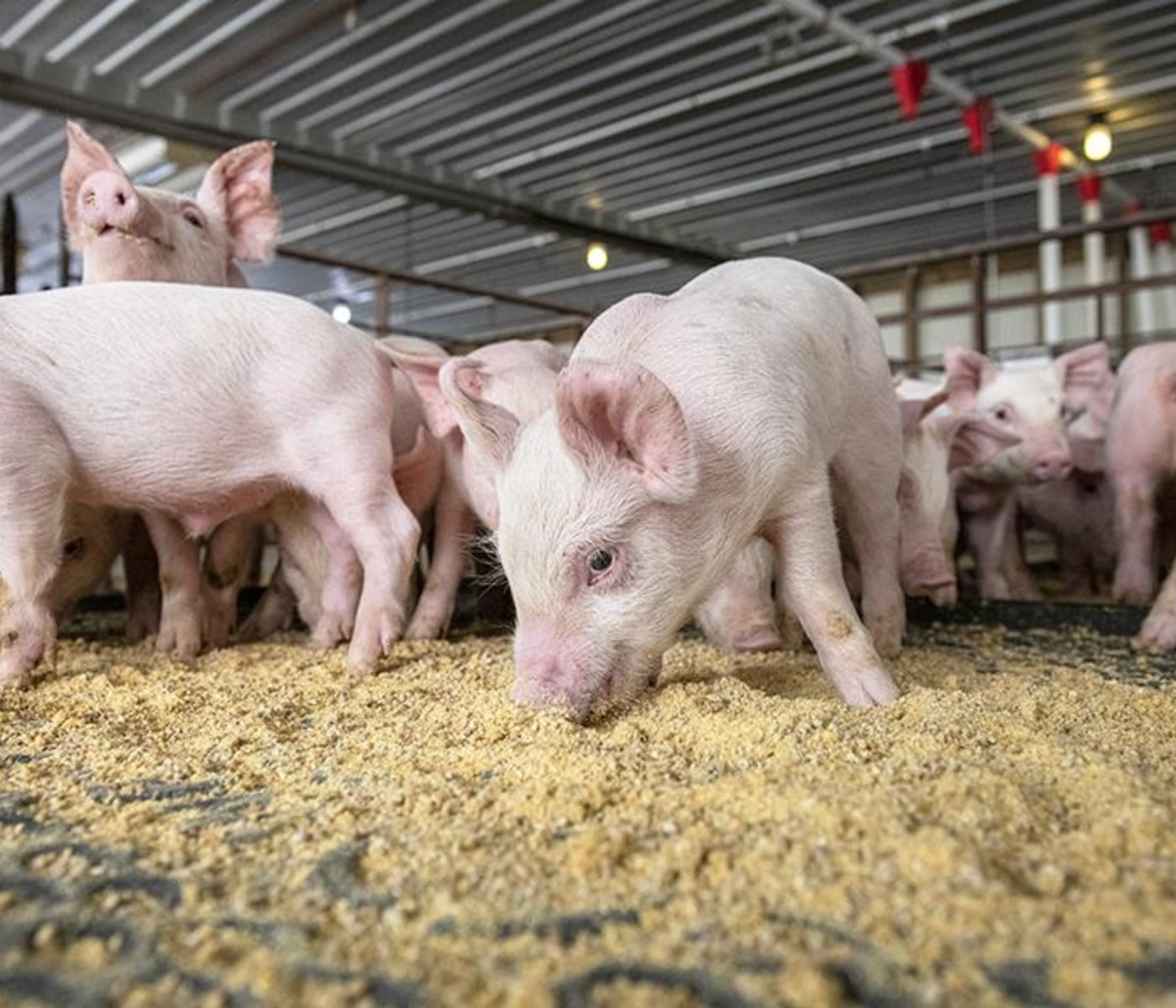
SWINE NUTRITION | GUT HEALTH | RESEARCH & INNOVATION
New Feed Proteins Show Promise as Zinc Oxide Alternative for Weaned Piglets
A new study involving 624 piglets suggests that specialized binding proteins added to feed could improve growth performance and faecal consistency during the challenging post-weaning period, offering a potential alternative to pharmacological zinc oxide.
Managing post-weaning diarrhoea (PWD) remains one of the most important health and nutritional challenges in modern pig production.
The transition from milk to solid feed, separation from the sow, regrouping and exposure to intestinal pathogens can disrupt gastrointestinal function, compromise growth and increase the need for veterinary interventions.
For many years, pharmacological concentrations of zinc oxide (ZnO) were widely used to help control these problems. However, the withdrawal of medicinal zinc oxide products in the European Union in 2022 has accelerated research into alternative nutritional strategies.
A new study published on 9 November 2026 in the scientific journal Animals investigated whether specialized immunoglobulin-derived binding proteins, known as bivalent VHH constructs, could provide comparable benefits for piglet intestinal health and productive performance.
The research, led by scientists from the Universitat Autònoma de Barcelona in collaboration with Bactolife, evaluated these proteins under both controlled experimental conditions and commercial nursery production.
RESEARCH AT A GLANCE
624 piglets
Evaluated across two complementary studies.
Experimental challenge: 96 piglets
Commercial nursery: 528 piglets
Why is post-weaning diarrhoea so difficult to control?
Weaning represents a period of considerable physiological and environmental stress for piglets.
The sudden change in diet and social environment can affect feed intake, intestinal development and the composition of the gut microbiota.
At the same time, piglets may become more susceptible to enteric pathogens, particularly enterotoxigenic Escherichia coli (ETEC).
Certain ETEC strains express fimbrial adhesins, including F4 and F18, that facilitate attachment to the intestinal epithelium. They may also produce enterotoxins that disrupt intestinal fluid and electrolyte balance.
The resulting diarrhoea can contribute to dehydration, reduced nutrient absorption, impaired growth and increased production costs.
Historically, pharmacological zinc oxide has been an effective tool for mitigating these problems.
However, concerns surrounding zinc accumulation in the environment and potential implications for antimicrobial resistance contributed to the withdrawal of medicinal ZnO products in the European Union.
The nutritional challenge: Developing alternatives that support piglet health and growth without relying on pharmacological zinc concentrations has become a major priority for the swine industry.
What are VHH-binding proteins and how do they work?
VHH-binding proteins are derived from single-domain antibody technology and can be engineered to recognize specific biological targets.
Unlike conventional nutritional additives that act broadly on the intestinal environment, these proteins are designed to bind selected bacterial virulence factors.
In this study, the researchers evaluated bivalent VHH constructs targeting three factors associated with pathogenic E. coli:
- F4 fimbriae: Structures involved in bacterial attachment to the intestinal lining.
- Heat-labile enterotoxin (LT): A toxin that contributes to intestinal fluid secretion and diarrhoea.
- Shiga-like toxin Stx2e: A toxin associated particularly with certain pathogenic E. coli strains and oedema disease in pigs.
By binding these targets, VHH proteins are intended to interfere with specific processes involved in bacterial pathogenicity.
The experimental proteins were supplied by Bactolife and manufactured through precision fermentation at Novonesis laboratories before being incorporated into feed granules.
This production approach allows targeted binding proteins to be delivered through conventional feed manufacturing systems.
A targeted nutritional approach: VHH proteins are designed to bind selected bacterial virulence factors rather than exert broad antimicrobial activity throughout the gastrointestinal tract.
Two trials evaluated performance under different conditions
The research included two complementary experiments designed to examine both biological responses and practical applicability.
Trial 1: Controlled ETEC challenge
The first experiment involved 96 male piglets weaned at approximately 21 days of age.
The animals were allocated to three dietary groups: an unsupplemented control diet, a diet containing pharmacological zinc oxide, or a diet supplemented with VHH-binding proteins targeting F4 fimbriae and LT toxin.
All piglets were subsequently challenged orally with an ETEC F4-positive strain.
The researchers monitored growth performance, faecal consistency, bacterial indicators and selected intestinal and immune parameters.
In this experimental model, VHH supplementation improved post-challenge growth and reduced certain faecal bacterial indicators compared with the control diet.
The VHH group also showed a more favorable ratio between lactobacilli and colonies detected on the study’s EHEC-selective culture medium.
However, the researchers noted that the culture method could not definitively identify every recovered colony as the inoculated ETEC strain.
Trial 2: Commercial nursery validation
The second trial involved 528 piglets on a commercial farm in Catalonia, Spain.
Animals were allocated to 48 pens, with 16 pens per dietary treatment.
As in the first experiment, the treatments included a control diet, a zinc oxide diet and a VHH-supplemented diet.
For the commercial trial, the VHH formulation also included a protein targeting Stx2e, broadening the range of virulence factors addressed.
The piglets were followed for 42 days after weaning, allowing researchers to evaluate growth performance and intestinal health indicators across the nursery period.
The commercial evaluation is particularly relevant because the nutritional strategy was tested under naturally occurring farm conditions rather than relying exclusively on an experimentally induced infection.
VHH supplementation increased final body weight and daily gain
One of the most important findings emerged from the commercial nursery trial.
At the end of the 42-day period, piglets receiving VHH supplementation had a significantly higher average body weight than those receiving the unsupplemented control diet.
The VHH group reached 16.82 kg, compared with 14.63 kg in the control group.
Piglets receiving zinc oxide had an intermediate average body weight of 15.77 kg.
| Performance indicator | Control | ZnO | VHH |
|---|---|---|---|
| Final body weight (kg) | 14.63 | 15.77 | 16.82 |
| Average daily gain (g/day) | 224.0 | 250.0 | 265.9 |
Source: Ferreres-Serafini et al., Animals (2026), Table 6. Differences between VHH and control were statistically significant for final body weight (p = 0.011) and overall average daily gain (p = 0.036). The ZnO group was intermediate and was not statistically different from either group.
Across the full nursery period, VHH-supplemented piglets achieved an average daily gain of 265.9 g/day, compared with 224.0 g/day in the control group.
This represents an approximately 18.7% higher average daily gain relative to the control treatment.
The study did not identify statistically significant treatment effects on feed conversion ratio or average daily feed intake.
Key finding: VHH supplementation significantly improved growth compared with the unsupplemented control, while zinc oxide produced intermediate results. The trial did not establish a statistically significant growth advantage of VHH over zinc oxide.
Improvements were especially evident among lighter piglets
Beyond average growth performance, the researchers examined how the treatments affected the distribution of body weights within the nursery population.
This analysis revealed that both VHH and zinc oxide supplementation were associated with improved performance among piglets in the lower body-weight percentiles.
At the end of the commercial trial, the 10th, 20th and 30th percentiles of body weight were higher in supplemented groups than in the control group.
These findings suggest that targeted nutritional interventions may be particularly relevant for piglets at greater risk of poor growth during the nursery phase.
Improving performance among lighter animals could potentially contribute to more uniform groups, although the effects on subsequent finishing performance were not evaluated in this study.
Faecal consistency improved during the early post-weaning period
The commercial trial also examined faecal consistency as an indicator associated with intestinal health.
During the first 14 days after weaning, piglets receiving VHH supplementation showed significantly lower average faecal scores than control animals (p = 0.005).
Zinc oxide supplementation also improved faecal scores during this early period.
However, during the subsequent starter phase, a significant reduction in faecal score compared with the control group was observed only for zinc oxide.
These findings suggest that VHH supplementation may be particularly useful during the immediate post-weaning transition, when intestinal disturbances are common.
The researchers also evaluated bacterial virulence genes in faecal samples.
Seven days after weaning, F4-associated virulence factors were detected in 44% of sampled VHH piglets, compared with 75% of control animals and 56% of zinc oxide-supplemented animals.
Although this numerical difference favored VHH supplementation, it did not reach statistical significance (p = 0.149).
Consequently, the results should be interpreted as suggestive rather than definitive evidence of reduced F4 prevalence under commercial conditions.
How does VHH supplementation compare with zinc oxide?
The study provides an opportunity to compare two different approaches to supporting piglet intestinal health.
Pharmacological zinc oxide has broad physiological and antimicrobial effects that can influence intestinal morphology and microbial populations.
VHH-binding proteins, by contrast, are designed to interact with selected bacterial virulence factors.
The researchers observed differences in microbiological and intestinal responses between the treatments.
In the controlled challenge trial, VHH supplementation was associated with lower faecal counts on the study’s selective culture medium, while zinc oxide showed a tendency toward improvements in selected intestinal morphology measurements.
These findings suggest that the two interventions may act through different biological pathways.
Nevertheless, both strategies produced beneficial outcomes compared with the unsupplemented control, supporting further investigation of targeted binding proteins as a nutritional tool.
What are the implications for commercial swine nutrition?
The results highlight the potential of precision fermentation and targeted protein technologies in the development of new functional feed ingredients.
Unlike conventional additives that broadly influence gastrointestinal conditions, VHH proteins offer a more specific approach to interacting with bacterial virulence factors.
For feed manufacturers and swine nutritionists, this could create opportunities to incorporate targeted biological ingredients into comprehensive post-weaning feeding programs.
However, successful application will depend on several factors, including the prevalence of relevant pathogenic strains, product stability, inclusion rates, feed processing conditions and economic feasibility.
It is also important to recognize that post-weaning diarrhoea has a multifactorial origin.
No single feed additive can replace appropriate biosecurity, hygiene, water quality, feed management, environmental control and veterinary oversight.
Practical implication: Targeted binding proteins may become an additional tool in post-weaning nutritional management, but their effectiveness must be evaluated within the broader health and production conditions of each farm.
Further commercial validation remains necessary
Although the results are encouraging, the authors identified several limitations.
The commercial trial was conducted on a single farm, meaning the findings may not apply equally across all production systems or health conditions.
The VHH formulations also differed between the experimental and commercial trials, preventing direct attribution of all observed responses to the same combination of binding proteins.
Furthermore, certain microbiological methods could not definitively distinguish the experimentally inoculated ETEC strain from other bacteria growing on the selective culture medium.
Future research will therefore be important to establish the reproducibility of the findings across multiple farms, production environments and pathogen exposure conditions.
Economic assessments and longer-term studies could also help determine the practical value of incorporating these proteins into commercial feeding programs.
A promising step toward more targeted piglet nutrition
The development of alternatives to pharmacological zinc oxide remains an important objective for the global swine industry.
The new research provides evidence that VHH-binding proteins can improve growth performance and selected intestinal health indicators under both experimental and commercial nursery conditions.
In particular, the improvements in final body weight, average daily gain and early faecal consistency suggest that these proteins could become useful components of post-weaning nutritional strategies.
While further validation is required, the study illustrates how advances in biotechnology and precision fermentation may contribute to the development of more targeted functional feed ingredients.
For swine producers, the longer-term opportunity lies in combining these innovations with effective nutrition, management and disease prevention to support healthier piglets and more consistent nursery performance.
Source and further reading
Ferreres-Serafini, L., Solà-Oriol, D., Martín-Orúe, S. M., Martín, M., Farré, M., Thrane, S. W., & Castillejos, L. (2026).
Validation of VHH-Binding Proteins as a Dietary Alternative to Pharmacological Zinc Oxide for the Control of Post-Weaning Diarrhoea in Piglets.
Animals, 16(21), 3542.
Journal: Animals (MDPI)
Published: 9 November 2026
DOI: 10.3390/ani16213542