 nutriNews Asia
Noticias 29 Oct



India's maize–soybean shock of 2026 is a warning, not an accident. A strategic reserve, designed on science and disciplined by economics, is the cheapest insurance India can buy for its protein future.

By Dr Shirish AP Nigam, Managing Director at EW Nutrition South Asia and Chairman, Sub-Committee on Public Policy and Advocacy at the Indian Federation of Animal Health Companies (INFAH).
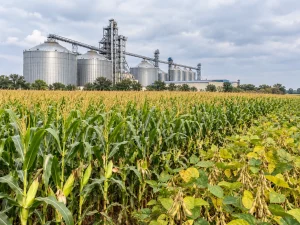
This season, two crops that rarely share a headline have failed together. Industry estimates put kharif maize at roughly 20-23 million tons (MT), against a record 30.5 MT in the Agriculture Ministry’s third advance estimate for 2025–26.
The Soybean Processors Association of India (SOPA) puts the kharif soybean crop at 10.79 MT, down 2.1%, with Maharashtra, Karnataka and Telangana losing a third to nearly half of their output to moisture stress. Soymeal, quoted near USD 358.06 a ton at Indore in January, touched USD 631.86 by July.
None of this is exotic; it is what a dry year does to rain-fed crops. What is exotic is that a country holding buffers of wheat, rice, pulses and onions has no formal buffer for the two ingredients that turn grain into eggs, chicken, milk and fish. India has planned for the plate. It has not yet planned for the feed trough.

Maize is now India’s third-largest food grain, with a record 55.1 MT produced in 2025–26. A FICCI–YES Bank report projects domestic demand near 72 MT by 2030–31. Poultry is the largest consumer, at roughly half of demand, while ICAR–IIMR’s Director said about a quarter of the crop now goes to ethanol. Feed, starch and fuel are chasing the same grain.



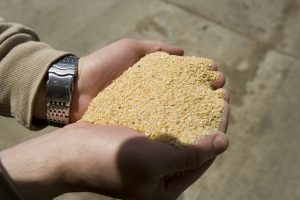
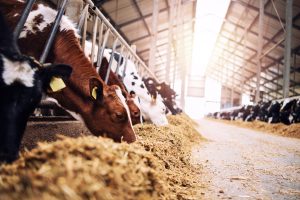
Soymeal is the principal protein in poultry, aquaculture and dairy rations, and substitutes are limited by amino-acid balance, availability and price. Feed makes up 65–70% of poultry production cost, so a feed shock reaches the cheapest animal protein in the Indian diet first and hardest. That makes feed a food-security issue, not merely a commercial one.
India has tried the reactive route. In August 2021, with soymeal prices having tripled, the Government permitted 1.2 MT of GM soymeal imports; traders could contract only about 0.65 MT before the window closed, constrained by logistics and by restrictions on ports and containerized shipment.
In 2026 the same argument has returned. Poultry bodies seek duty-free GM soymeal imports of 1.5–3 MT. SOPA has written to the Commerce Minister that 2026–27 availability of 8.17 MT exceeds demand of 8.0 MT, and that imports would depress farm prices. Feed manufacturers estimate demand at 10.62 MT.
When data is contested, response is slow; when response is slow, prices do the adjusting.
Two reasonable parties, two sets of numbers, and a 2.6 MT gap in assumed demand. A reserve replaces that argument with a rule.
Four design principles follow from how these commodities behave in storage.
Run counter-cyclically, a strategic reserve is a price band, not a subsidy. Buying at harvest, when farm-gate prices sag towards support levels, puts a floor under farmers’ incomes. Releasing when feed-ingredient prices cross a pre-notified trigger caps the spike borne by consumers and livestock farmers. It also rewards regions that are expanding: SOPA records soybean output up 32% in Madhya Pradesh and 48% in Rajasthan this year, and a predictable buyer would encourage more.
The onion buffer offers a warning on execution. In July the Centre raised its buffer procurement price by 13% to USD 22.38 a quintal, because the open market was paying up to USD 31.59 and delayed payments by agencies had discouraged sellers. Only about 2,000 tons had been pooled in the first weeks against a target of 2 lakh tons. The lessons: announce purchase rules in advance, pay promptly, and buy in the slack season, not mid-shortage.

The cost of insurance is small beside the cost of its absence. Take a reserve of 2.5 MT maize and 1 MT soybean. At today’s stressed trade prices about USD 0.32/kg and USD 0.76/kg that is roughly USD 154.81 crore of working capital, and at an assumed 10% annual carrying cost, about USD 15.80 crore a year before recoveries from rotation sales. Now consider soymeal alone: a USD 273.81 – a-ton rise, if sustained across 8 MT of annual demand, moves about USD 219.05 crore out of feed buyers’ pockets. A reserve filled at harvest lows would cost far less. These figures are illustrative, with assumptions stated.
A reserve works only if the rules are set before the crisis. One workable architecture:

Two safeguards keep the design honest. First, the rules must cut both ways: the trigger logic that protects feed buyers when prices spike should protect farmers when prices fall below support levels. Second, the reserve should be reported publicly each year on stock quality, rotation losses and price impact, so it remains a tool of stability rather than a source of distortion.
China holds roughly 60% of the world’s corn stocks, a forecast 166 MT for 2026/27, and publishes no data on its corn and soybean reserves. Analysts note that a ton in China’s reserve is unlikely to be released to another country in trouble; it is there for China. For India the implication is plain: grain accessible to the open market is thinner than headline stock figures suggest, and the world cannot be counted on to fill our gaps.
Meanwhile India is growing faster than the world. Global maize output rose about 2% a year over the past decade, from 1,037 to 1,262 MT; India’s nearly doubled, from 22.6 to about 50 MT, making it the fifth-largest producer. That growth is powered by livestock, ethanol and starch. A nation that wants to lead in animal protein cannot leave its feed supply exposed to monsoon swings and spot-market luck. Energy and defense stocks are accepted strategic policy; feed, which underpins protein security, belongs on the same list.

A reserve will not end volatility. It buys time to import, to substitute, to adjust, which is exactly what the 2026 crisis showed we lack. It must sit besides, not replace, long-term work: climate-resilient hybrids, protective irrigation, better yields (soybean still averages under 1 ton/ha) and a balanced Food–Feed–Fuel policy that reviews grain use for ethanol in deficit years.
Three steps can begin now. Ask DAHD, with DA&FW and Consumer Affairs, to design a Feed Reserve framework within 90 days. Start the monthly national feed balance sheet immediately. Pilot a revolving reserve across the next marketing season, scaling only after two full rotation cycles. The price of this insurance is a few thousand crore rupees of working capital. The price of going without it is paid in every hatchery, dairy and household.
Sources and notes:


Subscribe now to the technical magazine of animal nutrition
AUTHORS
From 2025 Data to 2026 Decisions: Managing Mycotoxin Risk in a Changing Climate
Alterion® NE Celebrates 10 Years of Poultry Gut Health Innovation
The Science Behind Kolin Plus: Beyond Choline Replacement
Summer Infertility in Sows: Managing Heat Stress and Reproductive Performance
AO-Biotics® Amaferm®: Supporting Livestock Digestion and Performance

Interview with Güner Gövenç
Güner Gövenç,
Net Energy and Precision Feeding Shape the Future of Poultry Nutrition
Edgar Oviedo
Mycotoxins in Swine: Health Risks and Nutritional Solutions
Giuseppe Carcò
Mycotoxins and Piglet Ear Necrosis: Cause, Cofactor or Coincidence?
Alberto Morillo
How Mycotoxins Affect Intestinal Health in Pigs and Poultry
Marcos Rostagno
From Antibiotics to Functional Feeds in Aquaculture
Babatunde Saliu
Peas as an Alternative to Soybean Meal in Beef Cattle Finishing Diets
Daniel Villalba Mata,
Improving Egg Yolk Pigmentation Through Better Nutrient Transport

Aquaculture and Aquaponics Nutrition: How Fish Shape the Growth of Greens
Trenton Corby
Consistency in Soybean Meal Drives Performance and Sustainability