 18 Sep 2026
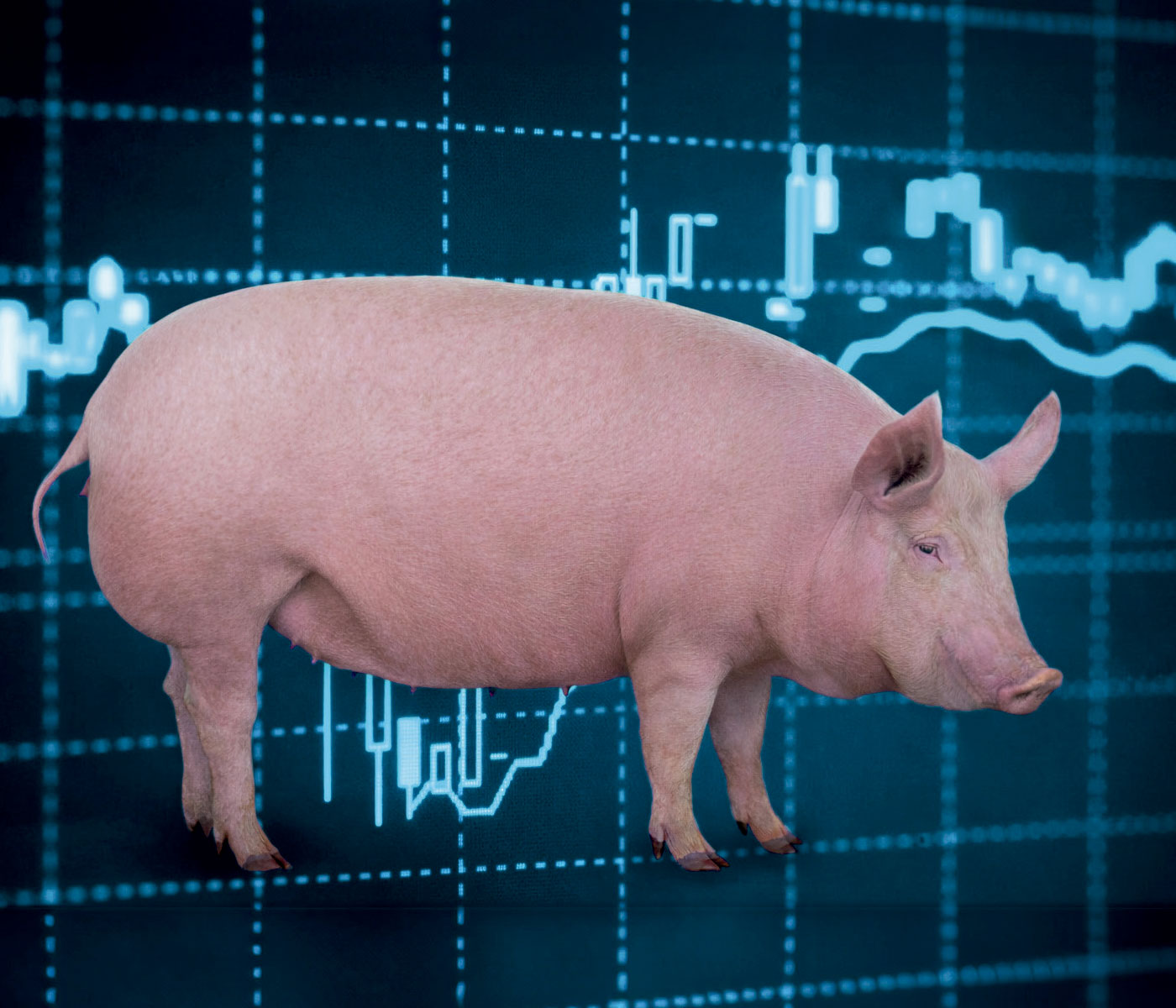
The pig industry is entering a period in which artificial intelligence, mathematical modeling and increasingly sophisticated animal-monitoring technologies are beginning to converge.
The objective is ambitious but straightforward: provide pigs with diets that more closely match their actual nutritional requirements, while avoiding unnecessary nutrient supply and improving the efficiency with which feed is converted into productive output.
A recent review published in Agriculture Communications examines advances in precision pig nutrition based on mathematical modeling, drawing particularly on research conducted at the Ministry of Agriculture and Rural Affairs Feed Industry Centre (MAFIC) at China Agricultural University and comparing these developments with work from other research groups.
The authors argue that mathematical modeling can serve as a fundamental tool for integrating increasingly complex nutritional and animal data. But achieving truly precise nutrition will require more than better equations. New data-collection technologies, advanced algorithms, big-data platforms, AI-assisted formulation software and precision feeding equipment will need to work together.


According to the review, precision pig nutrition depends on two fundamental capabilities: accurately assessing the nutritional value of feed and accurately determining the dynamic nutrient requirements of pigs. Mathematical models provide a framework for connecting these two sides of the equation.
Producing pork efficiently requires diets that support growth and lean tissue deposition without unnecessarily overfeeding protein, energy or other nutrients.
This is challenging because neither side of the nutritional equation is static.


Feed ingredients vary in nutritional value, while nutrient requirements change with body weight, genetics, growth rate, physiological state, environment and other factors. A diet formulated around average values therefore cannot perfectly represent every animal or every stage of production.
The review conceptualizes precision nutrition around two major objectives:
Turning these principles into an effective feeding program involves several interconnected steps: evaluating feed ingredients, determining nutrient requirements, selecting an appropriate formulation and ultimately delivering that diet through suitable feeding equipment.
Mathematical modeling can help connect these different components.
Mathematical modeling uses equations, algorithms or computational frameworks to create quantitative representations of real biological processes.
In animal nutrition, models can be used to describe and predict:
Models can take very different forms. Some are empirical, deriving relationships directly from observed data, while others are mechanistic and attempt to represent the biological processes responsible for an observed response. Models can also be deterministic or stochastic depending on how uncertainty and variation are represented.
The value of modeling lies partly in its ability to integrate information that would otherwise remain fragmented across different experiments, animals and datasets.
Traditional animal experiments remain fundamental, but mathematical models can extract additional value from accumulated data by identifying relationships and generating predictions. The model becomes a bridge between biological knowledge, experimental observations and practical feeding decisions.
One of the first requirements for precision feeding is knowing the nutritional value of the ingredients being used.
This is more difficult than simply consulting a static feed table because ingredients vary according to origin, variety, growing conditions, processing and chemical composition.
Mathematical models offer a way to use multiple characteristics of a feed ingredient simultaneously to predict its nutritional value.
The review highlights this approach particularly in relation to net energy (NE). Energy evaluation is central to swine diet formulation because energy intake influences maintenance, protein deposition, lipid deposition and ultimately growth performance.
More accurate prediction of feed energy values can therefore help reduce the gap between the energy assumed during formulation and the energy actually available to the animal.
As nutritional datasets become larger and more complex, researchers are increasingly exploring algorithms capable of detecting relationships that may be difficult to represent using conventional equations alone.
The review describes the application of several emerging approaches, including:
These approaches are being investigated for tasks such as predicting the net energy values of feed ingredients, constructing nutrient requirement tables and forecasting pig growth performance when datasets contain large numbers of observations and parameters.
Artificial neural networks are particularly interesting because they can capture complex and nonlinear relationships among variables. However, greater predictive complexity also introduces an important challenge: understanding why a model generated a particular prediction.
This explains the growing interest in interpretable machine learning, which seeks to combine predictive performance with greater transparency.
More advanced algorithms can identify complex relationships within large datasets, but their usefulness still depends on reliable biological data, appropriate model development and meaningful nutritional interpretation. Better algorithms cannot compensate indefinitely for poor-quality inputs.
Predicting feed value addresses only one side of precision nutrition. The other challenge is determining what the animal actually needs at a particular moment.
The review highlights two emerging non-invasive approaches that could provide useful information without relying exclusively on conventional laboratory or experimental techniques:
Heart rate can provide information associated with metabolic activity and heat production. The researchers describe its potential as a non-invasive, portable, reproducible and comparatively cost-effective approach for generating real-time predictions of heat production in pigs.
If measurements such as these can be integrated reliably into nutritional models, they could provide a more dynamic picture of energy expenditure than relying solely on generalized population averages.
Bioelectrical impedance analysis (BIA) uses the electrical properties of body tissues to help estimate body composition.
For precision nutrition, this is particularly relevant because changes in lean and fat deposition influence nutrient and energy requirements. A practical method for repeatedly estimating body composition could therefore help models adjust nutritional recommendations as an animal develops.
Together, technologies such as heart rate monitoring and BIA illustrate an important shift: the animal itself can increasingly become a continuous source of data for nutritional decision-making.
Conventional nutrient requirement systems have played an essential role in modern pig production. However, requirement tables necessarily simplify biological variation.
Precision nutrition points toward a more dynamic system in which models continuously integrate information about the animal, diet and production environment.
Instead of asking only:
“What does a pig of this weight generally require?”
future systems could increasingly ask:
“What does this pig—or this group of pigs—require under its current conditions and expected growth trajectory?”
This transition is particularly important because nutrient requirements change continuously throughout the production cycle.
Precision nutrition does not simply mean formulating diets more accurately. Its longer-term objective is to adjust nutrient supply according to changes in the animal itself, reducing the mismatch between what is supplied and what is biologically required.
Feed formulation is itself an optimization problem. Nutritionists must simultaneously consider nutrient requirements, ingredient composition, ingredient prices, availability, constraints and expected animal performance.
The review points toward the development of multi-objective formulation algorithms capable of considering several objectives rather than optimizing exclusively for minimum feed cost.
This could become increasingly relevant as formulations need to balance:
The authors also highlight the emergence of AI feed-formulation software based on large language model architectures and big-data analysis platforms.
These systems could eventually provide nutritionists with new ways to interrogate complex datasets, compare formulation scenarios and integrate rapidly changing information.
However, their practical value will depend on the quality of the underlying nutritional databases and the reliability with which algorithmic recommendations can be validated.
Despite rapid advances in AI, the review identifies a fundamental limitation affecting animal-nutrition modeling: insufficient data.
Animal experiments are expensive and time-consuming, and nutritional datasets may differ substantially in experimental design, animal genetics, diets, environments and measurement techniques.
This can limit the amount of standardized information available to train and validate complex models.
At the same time, some existing models rely on algorithms that may no longer take full advantage of modern computational capabilities.
For this reason, progress toward precision nutrition requires development on several fronts simultaneously:
A highly accurate model has limited practical value if its recommendation cannot be delivered to the animal.
This makes precision feeding equipment another essential component of the system envisioned by the authors.
In principle, mathematical models could estimate changing nutrient requirements, formulation software could determine an appropriate dietary combination, and automated feeding systems could deliver diets adjusted according to those predictions.
The result would be a feedback system connecting:
DATA → PREDICTION → FORMULATION → FEED DELIVERY → ANIMAL RESPONSE → NEW DATA
The real transformation will occur when animal monitoring, feed evaluation, mathematical models, AI-assisted formulation and precision feeding equipment stop operating as separate technologies and begin functioning as parts of the same decision-making system.
If these technologies can be validated and implemented economically at commercial scale, the implications extend beyond simply improving prediction accuracy.
Better alignment between nutrient supply and animal requirements could help producers:
These potential benefits also align precision nutrition with broader objectives around production efficiency and sustainable pig production.
The development of precision pig nutrition is therefore not simply a story about artificial intelligence.
Mathematical models have long provided a framework for converting biological observations into quantitative predictions. What is changing is the amount and type of information that can now feed those models—and the computational tools available to analyze it.
Heart rate monitoring and bioelectrical impedance analysis could provide new streams of animal-level information. Machine learning can analyze increasingly complex datasets. Big-data platforms can bring information together. AI-assisted formulation systems can help translate predictions into diets, while precision feeders provide a mechanism for delivering them.
The major challenge is integrating these components into systems that are biologically accurate, interpretable, economically viable and robust enough for commercial production.
The future of precision pig nutrition may depend less on a single breakthrough technology than on the integration of mathematical modeling, better data collection, advanced algorithms, intelligent formulation software and precision feeding equipment. Together, these tools could progressively move swine nutrition from population averages toward dynamic and increasingly personalized feeding strategies.
Hu Q, Li Y, Luo X, Zhang S, Li Z, Bao X, Wang L, Dong W, Li E, Wang L, Lai C, Zhang S. Achieving precision nutrition in pigs through the utilization of mathematical modeling as a fundamental tool: A review of recent work. Agriculture Communications. 2025;3:100115.
DOI: 10.1016/j.agrcom.2025.100115

Subscribe now to the technical magazine of animal nutrition
AUTHORS
From 2025 Data to 2026 Decisions: Managing Mycotoxin Risk in a Changing Climate
Alterion® NE Celebrates 10 Years of Poultry Gut Health Innovation
The Science Behind Kolin Plus: Beyond Choline Replacement

Summer Infertility in Sows: Managing Heat Stress and Reproductive Performance
AO-Biotics® Amaferm®: Supporting Livestock Digestion and Performance

Interview with Güner Gövenç
Güner Gövenç,
Net Energy and Precision Feeding Shape the Future of Poultry Nutrition
Edgar Oviedo
Mycotoxins in Swine: Health Risks and Nutritional Solutions
Giuseppe Carcò
Mycotoxins and Piglet Ear Necrosis: Cause, Cofactor or Coincidence?
Alberto Morillo
How Mycotoxins Affect Intestinal Health in Pigs and Poultry
Marcos Rostagno
From Antibiotics to Functional Feeds in Aquaculture
Babatunde Saliu
Peas as an Alternative to Soybean Meal in Beef Cattle Finishing Diets
Daniel Villalba Mata,
Improving Egg Yolk Pigmentation Through Better Nutrient Transport

Aquaculture and Aquaponics Nutrition: How Fish Shape the Growth of Greens
Trenton Corby
Consistency in Soybean Meal Drives Performance and Sustainability