 04 Sep 2026
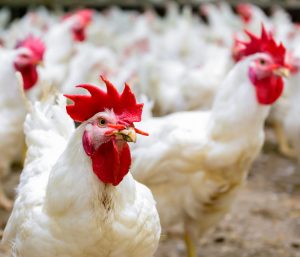
If you have worked in poultry nutrition anywhere in the world over the past 30 years, chances are a well-thumbed copy of the National Research Council (NRC) ‘Nutrient Requirements of Poultry’ has sat on your desk. First printed decades ago and last updated in 1994, that red-and-white publication became the universal reference point for setting baseline feed formulas. But as anyone walking through a modern broiler house or layer complex knows, the birds we raise today bear little resemblance to those of 30 years ago.
That is why the release of the 10th Revised Edition – now published under the banner of the National Academies of Sciences, Engineering, and Medicine (NASEM) – is such a watershed moment for our industry. It closes a 30-year gap in formal nutritional standards, giving nutritionists, feed mill managers, and poultry producers a completely rebuilt scientific foundation designed for modern genetics and contemporary management systems.
For the Asian poultry sector – currently experiencing some of the world’s fastest growth alongside unique feed raw material challenges – this update arrives at a crucial time. Moving from decades-old guidelines to these modernized standards offers a direct path toward lower feed waste, better health outcomes, and improved profitability.

Why the 1994 benchmarks were falling short
To understand why this new edition matters so much, it helps to look at how dramatically poultry production has evolved since 1994. Through selective breeding, modern broilers reach market weight in almost half the time they used to, consuming significantly less feed per kilogram of gain. Today’s commercial layers maintain high peak production for far longer, requiring sustained metabolic support well past 80 to 90 weeks of age.
When nutritionists rely on outdated benchmarks, two major problems occur. First, high-performing birds can be under-nourished during crucial growth windows, preventing them from achieving their full genetic potential. Second, to guard against potential shortfalls, feed formulators often oversupply crude protein or minerals like dicalcium phosphate. This ‘safety margin’ approach inflates diet costs, stresses the bird’s metabolic system, and leads to excessive nitrogen and phosphorus excretion into the environment.
The NASEM committee spent years sifting through thousands of peer-reviewed studies published since the mid-1990s. Their goal was straightforward: remove the guesswork and replace outdated assumptions with clear, data-driven models tailored to today’s commercial birds.
KEY TAKEAWAY – “Using 1994 nutritional benchmarks on a 2026 commercial flock is like trying to fuel a high-performance modern engine with low-octane fuel from another era. The 10th Edition brings feed standards into alignment with today’s genetic reality.”
Core scientific updates: What has changed?
The 10th Revised Edition introduces updates across every area of poultry nutrition. However, four main areas stand out for practical feed formulation:
[1] Precision amino acids and the ideal protein concept
Rather than focusing heavily on total crude protein percentages, the report doubles down on digestible amino acids and ideal amino acid ratios. Requirements for key limiting amino acids including lysine, methionine, cysteine, threonine, tryptophan, and valine – have been systematically updated across different growth stages. By matching digestible amino acid profiles directly to physiological requirements, producers can safely lower crude protein levels in the diet. This improves gut health, reduces wet litter problems, and significantly cuts feed costs.
[2] Transitioning towards net energy
While Metabolizable Energy (ME) remains a standard metric globally, the 10th Edition places greater emphasis on Net Energy (NE) principles. ME measures energy in the feed minus what is lost in excreta, but it fails to account for the heat generated during digestion (the heat increment). Because digesting excess protein generates considerable heat—a major issue during humid Asian summers—understanding NE helps nutritionists formulate diets that keep birds cooler and maintain feed intake.
[3] Modernized mineral and vitamin profiles
Fast growth and extended laying cycles place immense strain on the avian skeleton and vascular system. The report updates guidelines for macro-minerals like calcium and non-phytate phosphorus, reflecting a deeper understanding of phytase enzymes. It also reviews trace elements (zinc, copper, manganese, selenium) and vitamins, highlighting how improved bioavailability from organic sources can support immune defense, leg integrity, and eggshell quality.
[4] Expanded ingredient matrix and feed additives
One of the most practical additions in the new volume is an expanded ingredient composition database covering over 100 feed ingredients. This includes detailed profiles for co-products from grain processing, biofuel production, and rendering. Furthermore, the report evaluates the scientific consensus around functional additives—such as exogenous enzymes (phytases, xylanases, glucanases), organic acids, and gut health modifiers—explaining how they alter nutrient availability.
Why this publication matters deeply for Asia
While the NASEM report provides global benchmark values, its practical adoption across Asia addresses several very specific, high-priority regional challenges:
How to access the book
Accessing this critical knowledge base is straightforward, with options available for every budget:
Here is the link to access: https://www.nationalacademies.org/projects/DELS-BANR-15-01/publication/25395
Looking ahead: Putting knowledge into practice
A scientific publication is only as valuable as its practical implementation. For Asian poultry producers, integrating the 10th Edition’s principles into daily operations will not happen overnight. It requires updating feed formulation software matrices, re-evaluating safety margins with feed suppliers, and re-training technical staff.
However, the investment in updating your dietary standards is well worth the effort. In an industry defined by thin margins, unpredictable commodity markets, and evolving consumer demands, moving toward precise, modern nutrition is one of the safest ways to secure your operation’s future. The 10th Revised Edition provides the map; it is now up to our industry to put it to work.

Subscribe now to the technical magazine of animal nutrition
AUTHORS
Consistency in Soybean Meal Drives Performance and Sustainability
Anna Cotcho
Kolin Plus FC: greener choline nutrition for poultry

Middle East conflicts disrupt global feed markets
Edgar Oviedo
Optimizing nutrition for dairy goat and sheep productivity in Cyprus
Carolina Kyriacou
pHix-up improves rumen stability in dairy cows
Subacute ruminal acidosis
Net energy and growth: keys to better prediction in swine production
Gabriela Martínez
How starch structure & protein reduction shape gut health in weaned pigs
Diana Luise
Astaxanthin supplementation in aquaculture
Babatunde Saliu
What is intestinal health?
Marcos Rostagno
Calcium, phosphorus, and phytase optimization in broiler diets
Anna Cotcho