 18 Sep 2026
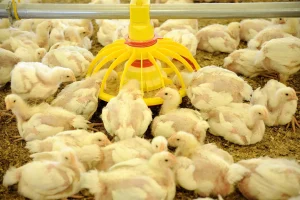
Heat stress remains one of the most persistent challenges in broiler production, especially in tropical regions where high humidity compounds the problem. Poultry lack sweat glands and rely on panting to release excess heat.
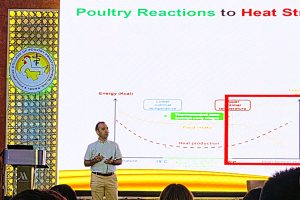
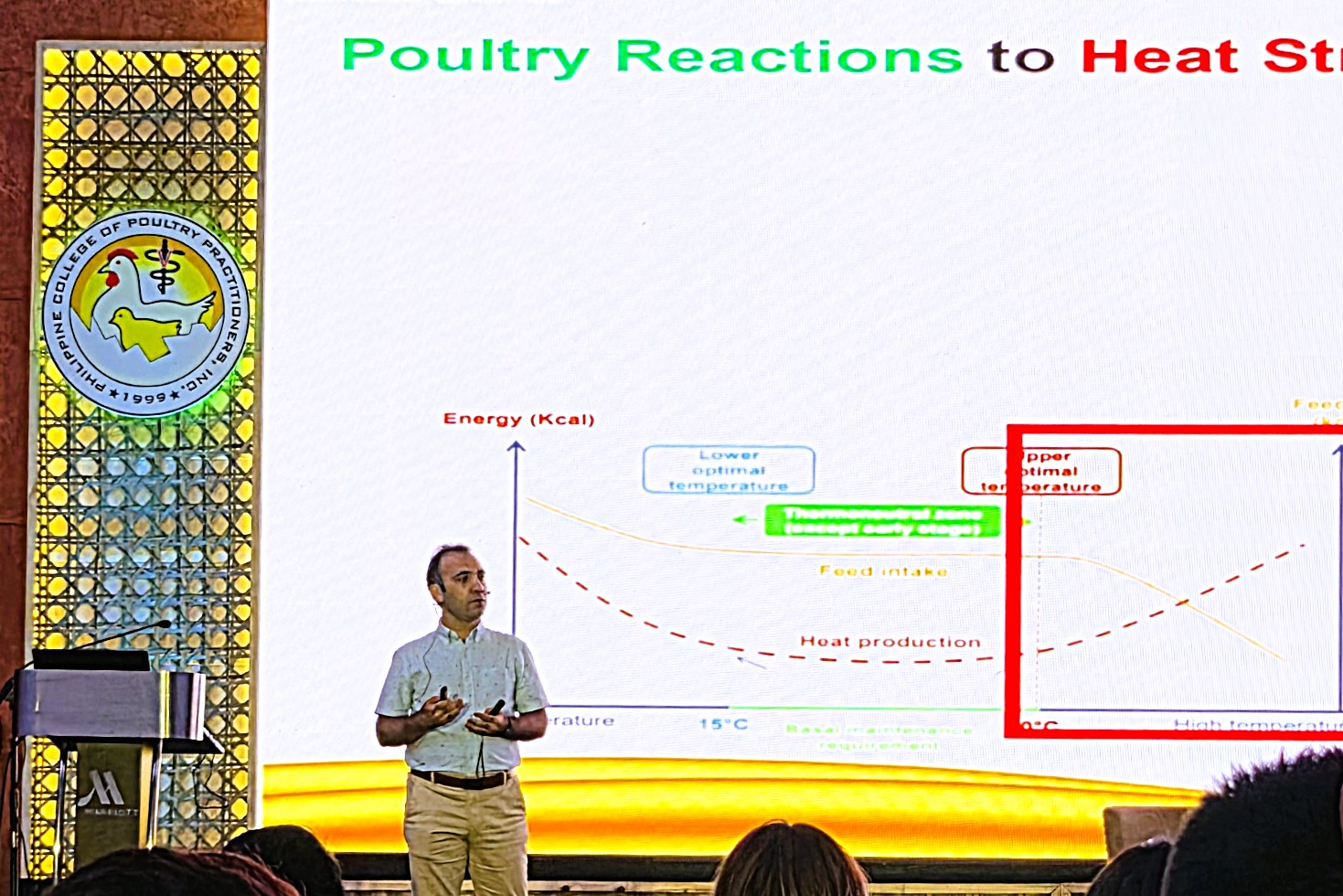
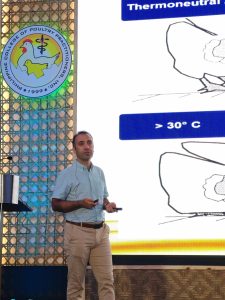
“Panting is their main way to excrete the heat from body, but in many cases this action is not enough,” Dr Vahid Khaksarzareha, Global Poultry Lead, told nutriNews Asia during an interview at the Philippine Poultry School in Manila on August 6–7, 2026.

Dr Vahid Khaksarzareha

In climates like Asia‑Pacific, where humidity levels are consistently high, traditional cooling methods are less effective, forcing producers to adopt more integrated strategies.
The onset of heat stress triggers immediate physiological changes. Birds instinctively reduce feed intake to lower metabolic heat, but this comes at a cost. Growth slows, feed conversion ratio declines, and carcass quality suffers.
“When the heat stress arrives, physiologically the animal tries to decrease the feed intake… while this feed reduction leads to suppressed growth,” Dr Vahid explained.



Prolonged stress also weakens immunity, leaving flocks more susceptible to disease outbreaks. Severe cases can escalate to cardiac or respiratory failure, resulting in high mortality.
Not all broilers respond equally. Fast‑growing, high‑performance strains are particularly vulnerable because their elevated metabolic demands generate more internal heat. While no single growth stage is uniquely at risk, the genetic predisposition of these strains makes careful management essential.
Producers must balance the drive for rapid growth with the need to safeguard welfare, especially during peak summer months.
Housing design and ventilation remain central to prevention.
Dr Vahid highlights the importance of maintaining air speed and controlling humidity: “The most promising housing strategies would be good ventilation which needs a decent air speed and regulated humidity.”
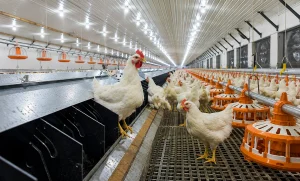
In practice, this means investing in tunnel ventilation systems, evaporative cooling pads, or fans that can sustain airflow even during the hottest hours. Reducing stocking density also helps birds spread out, lowering heat buildup.
Water management is equally vital. Birds increase water intake to prevent dehydration, but quality and temperature are critical.
“When there is heat stress, the need to water will increase… but we should be careful to provide clean cool water,” he advised.
Poorly maintained water lines can harbor bacteria, compounding stress with disease risks. Farmers in tropical regions often insulate water pipes or flush lines regularly to ensure birds receive cool, clean water. Together, ventilation and water systems form the frontline defense against heat stress.
Feed strategies can help broilers cope with high temperatures. Dr Vahid outlined a two‑pronged approach.
“To alleviate the heat stress, at ADM we have two principles: Solutions and Services. Solution could be additive and specialties, and Services would be digital application, housing management and feed formulation adjustment,” he pointed out.
Additives such as electrolytes maintain osmotic balance, vitamins strengthen immunity, and antioxidants reduce oxidative damage caused by heat. Adjusting feed formulations to lower starch level and increase oil level can also reduce metabolic heat production without compromising growth.
Technology is increasingly part of the solution. Automated cooling systems, sensors, and climate‑controlled housing provide precision tools for farmers. Sensors can track temperature, humidity, and bird behavior in real time, alerting managers before stress escalates. Integration of digital monitoring with housing and nutrition strategies creates a holistic approach, allowing farms to respond quickly and consistently.
Heat stress is not only a welfare issue but also a financial one. Reduced feed intake and slower growth directly erode profitability.
“As heat stress decreases the feed intake and suppresses the growth, so it affects negatively a lot the poultry farming profitability,” Dr Vahid stressed. In severe heat waves, mortality can spike, while feed conversion ratios may worsen and consequently raising production costs.
Farmers must remain alert to early indicators such as decreased feed intake, increased water consumption, wing spreading, and panting. Detecting these signs early allows interventions before mortality rises. Importantly, productivity and welfare are not opposing goals. Effective management minimizes stress while supporting growth, creating a win‑win for farmers and animals alike. Birds under less stress show better feed efficiency, lower inflammation, and improved overall health, reinforcing the link between welfare and profitability.
Looking ahead, Dr Vahid sees artificial intelligence (AI) as a potential breakthrough.
“I would like artificial intelligence support to distinguish the heat stress at the very early step and propose the most related management practices and/or nutritional strategies,” he said. AI‑driven systems could monitor animal behavior, housing conditions, and performance metrics, providing predictive alerts before stress escalates.
With climate change driving more frequent and intense heat waves, the poultry industry must adapt. Constructing housing with heat‑resistant materials, improving early detection systems, and adopting a complete portfolio of solutions and services enhanced by AI will be essential. Regional extension services could integrate AI platforms to support small and medium‑scale farmers, ensuring innovations reach beyond large commercial operations.
Heat stress is a multifaceted challenge that affects broiler physiology, farm profitability, and animal welfare. In tropical climates, high humidity intensifies the problem, making management more complex.
Dr Vahid’s insights highlight the importance of integrated strategies—ventilation, water management, nutrition, technology, and AI innovation—to protect flocks and sustain productivity. As global temperatures rise, the poultry industry must prepare with resilience, innovation, and a commitment to both performance and welfare.


Subscribe now to the technical magazine of animal nutrition
AUTHORS
Consistency in Soybean Meal Drives Performance and Sustainability
Anna Cotcho
Kolin Plus FC: greener choline nutrition for poultry

Middle East conflicts disrupt global feed markets
Edgar Oviedo
Optimizing nutrition for dairy goat and sheep productivity in Cyprus
Carolina Kyriacou
pHix-up improves rumen stability in dairy cows
Subacute ruminal acidosis

Net energy and growth: keys to better prediction in swine production
Gabriela Martínez
How starch structure & protein reduction shape gut health in weaned pigs
Diana Luise
Astaxanthin supplementation in aquaculture
Babatunde Saliu
What is intestinal health?
Marcos Rostagno
Calcium, phosphorus, and phytase optimization in broiler diets
Anna Cotcho