 08 May 2026
Taste is more than flavor, it’s a physiological trigger that influences eating behavior. Umami taste (translating from Japanese as “delicious savory taste”) is primarily associated with the presence of specific free amino acids. Amino acids naturally stimulate saliva production and enhance appetite, which is key when transitioning piglets to solid feed.
In piglets, feed intake is regulated by multiple mechanisms, including a multi‑channel system in which amino acids play a central role. Among these, umami has been scientifically shown to be triggered by eight free amino acids: alanine, asparagine, aspartic acid, glutamic acid, glutamine, proline, serine and threonine.
These activate appetite‑related chemosensory pathways and promote eating behavior (Roura et al., 2011). Importantly, umami receptors are not confined to the tongue; they are expressed throughout the entire gastrointestinal tract, where they act as nutrient sensors that further stimulate hormonal and neural signaling involved in appetite regulation.
This dual action, oral taste perception — combined with gut nutrient sensing — reinforces early and frequent feed intake in post‑weaning piglets.
DID YOU KNOW?
Umami: The Savory Trigger Of Appetite
The umami taste was first scientifically identified in 1908 by Kikunae Ikeda, a professor from the Tokyo Imperial University. Umami is the taste of “savoriness”, alongside sweet, sour, salty, and bitter. It delivers a rich, meaty, mouthwatering sensation, naturally found in shellfish, mushrooms, ripe tomatoes, aged cheeses, seaweed, and fermented products.
Umami compounds naturally present in feed can trigger these appetite reflexes, encouraging piglets to start eating sooner. Unlike synthetic additives, umami originates from natural ingredients such as yeast extracts, hydrolyzed proteins, or plant‑based alternatives, supporting nutritional strategies aligned with the growing demand for natural feed formulations.
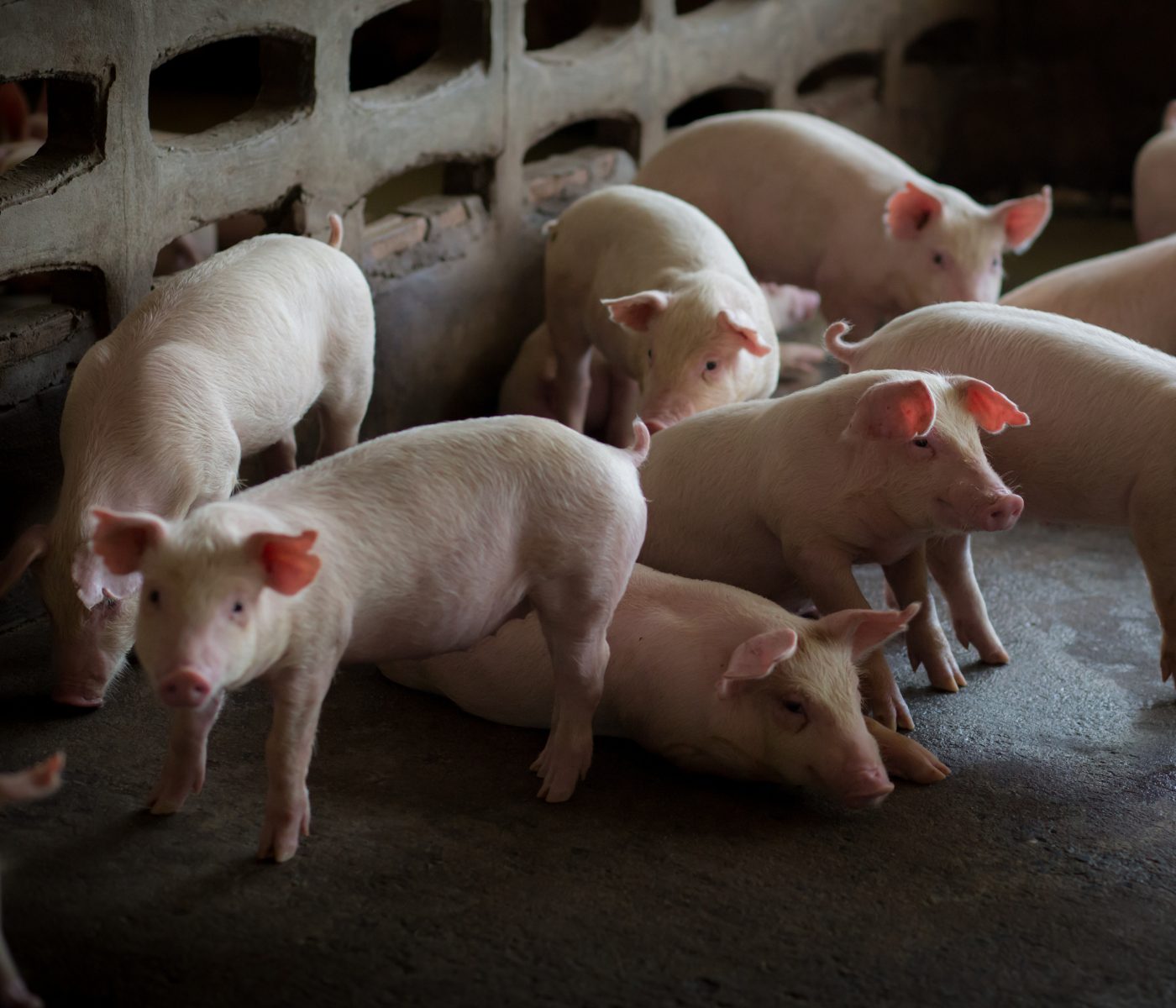
The post-weaning period is one of the most critical phases in pig production. Piglets face abrupt changes: separation from the sow, transition to solid feed, and an immature digestive system struggling to adapt.
These stressors often lead to temporary fasting, low energy intake and impaired gut function. Early and consistent feed intake helps stabilize stomach pH, stimulates digestive enzymes, supports gut maturation and sets piglets up for robust performance.
Thanks to a controlled hydrolysis process, 94% of the soluble protein fraction from YELA PROSECURE — a specific functional hydrolyzed yeast from Lallemand — consists of free amino acids and small peptides, making the product highly digestible and bioavailable for the animals.
Thanks to its full and balanced range of primary and secondary amino acids, YELA PROSECURE contributes significantly to enhance the feed intake of piglets through different complementary mechanisms, including the umami channel (Figure 1).
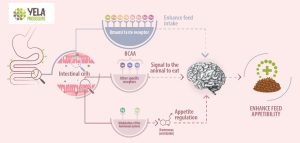
Beyond umami, branched-chain amino acids (BCAAs) — such as leucine, isoleucine and valine — trigger signaling pathways between intestinal cells and the brain, stimulating feed intake, while amino acids like tryptophan and phenylalanine, which are precursor of serotonin, modulate hormonal systems to regulate appetite.
Glutamic acid further reinforces this effect. YELA PROSECURE enhances palatability and supports the physiological mechanisms that drive early and consistent feed consumption by providing these key amino acids in a readily available form.
Several trials demonstrated the consistent beneficial effects of YELA PROSECURE on piglet feed intake and growth along different nutritional strategies. As an example, research with piglets at 28 days old showed that feeding YELA PROSECURE improves zootechnical performance, including significantly better in average daily feed intake and average daily gain (Figure 2).
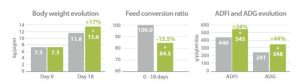
Figure 2. Research farm, Spain, 2020 – P < 0.005. Feed conversion ratio: Control data normalized at 100 value – YPS data relative value compared to control (Bravo de Laguna et al., 2025)
YELA PROSECURE is designed to deliver multiple functionalities — not just appetibility. Beyond flavor, thanks to its high level of free amino acids and small peptides, YELA PROSECURE, shows a flash and fast protein digestibility kinetic with 77% digestibility measured right after the stomach and more than 90% after 3 hours of the intestinal phase.
Supplying animals with a flash and fast digestible protein source, rich in free amino acids and small peptides, helps them easily absorb and use those nutrients.
It supports animal performance, maintains digestive health and fosters feed intake/appetite regulation while contributing to the feed protein balance. This is particularly of interest when fed during sensitive developmental stages.
Finally, YELA PROSECURE contains approximatively 38% of total dietary fibers (fermentable carbohydrates), mainly insoluble, that can be used by hindgut microbial populations. Fibrobacteres and Ruminococcus — bacteria located in the hindgut — are the primary degraders of those fermentable insoluble carbohydrates, leading to a fiber fermentation.
Short chain fatty acids (SCFAs), such as acetate, propionate and butyrate (the preferred energy source for the gut), are metabolites from fiber fermentation. SCFAs production help maintain optimal gut integrity with closed tight junctions. In turns, it reduces the risk of inflammation and modulates the gut microbiota. From the outside, it translates into better growth performance of the piglets.
Early feed intake isn’t just about providing feed. It’s about activating physiological drivers that help piglets thrive. YELA PROSECURE effectively stimulates appetite while simultaneously supporting digestive and gut health maintenance. This dual action makes it a compelling solution for improving post-weaning performance — going well beyond simple taste enhancement.
For more information on YELA PROSECURE and its benefits, visit Lallemand Animal Nutrition:
Subscribe now to the technical magazine of animal nutrition
AUTHORS

From 2025 Data to 2026 Decisions: Managing Mycotoxin Risk in a Changing Climate
Alterion® NE Celebrates 10 Years of Poultry Gut Health Innovation

The Science Behind Kolin Plus: Beyond Choline Replacement

Summer Infertility in Sows: Managing Heat Stress and Reproductive Performance
AO-Biotics® Amaferm®: Supporting Livestock Digestion and Performance

Interview with Güner Gövenç
Güner Gövenç,
Net Energy and Precision Feeding Shape the Future of Poultry Nutrition
Edgar Oviedo
Mycotoxins in Swine: Health Risks and Nutritional Solutions
Giuseppe Carcò
Mycotoxins and Piglet Ear Necrosis: Cause, Cofactor or Coincidence?
Alberto Morillo
How Mycotoxins Affect Intestinal Health in Pigs and Poultry
Marcos Rostagno
From Antibiotics to Functional Feeds in Aquaculture
Babatunde Saliu
Peas as an Alternative to Soybean Meal in Beef Cattle Finishing Diets
Daniel Villalba Mata,
Improving Egg Yolk Pigmentation Through Better Nutrient Transport

Aquaculture and Aquaponics Nutrition: How Fish Shape the Growth of Greens
Trenton Corby
Consistency in Soybean Meal Drives Performance and Sustainability