 06 May 2026
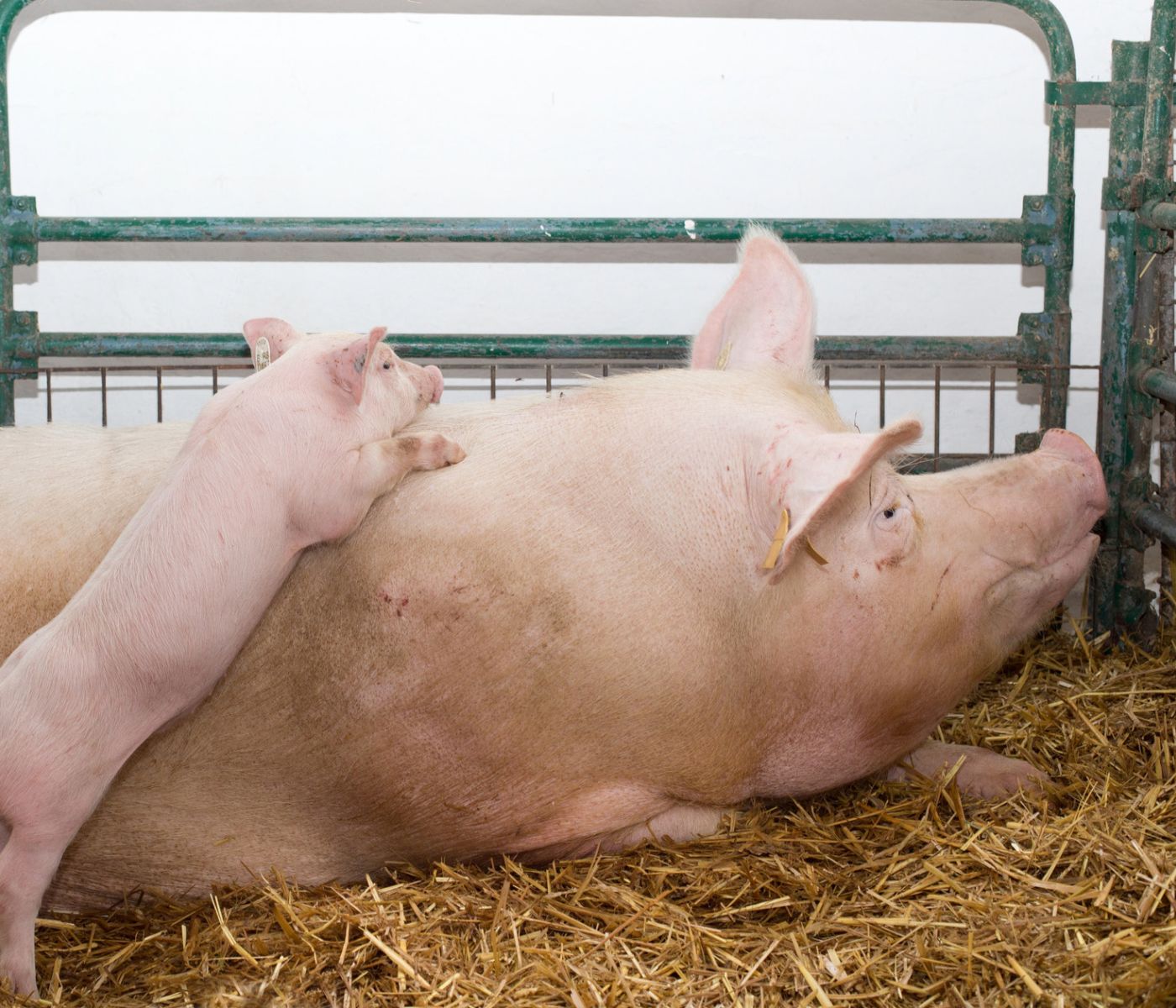
Modern high‑prolific sows are the elite athletes of today’s pig industry. They are the result of decades of genetic selection, producing large litters of 14 to 16 piglets, and sometimes even more. While this genetic progress has strongly boosted sow farm productivity, the limiting factor today is no longer genetics but the sow’s metabolic capacity.
During late gestation and lactation, metabolic demands are extremely high, and feed intake often falls short, leading to a negative energy balance and consequently, mobilization of body reserves.
This catabolic state seriously compromises reproductive performance and sow longevity. It can also impair colostrum quality and milk yield, directly affecting piglet survival and growth. At the same time, these large litters increase the number of lightweight, more vulnerable piglets, intensifying competition for colostrum and increasing pre-weaning mortality.
Against this background, sow producers are looking for solutions that go beyond treating symptoms alone; they want to fully unlock the genetic potential of their sows. This is where targeted nutrition comes in. Targeted nutrition is not about simply adding more nutrients, but about precise dietary strategies tailored to each production stage and to each sow farm’s specific challenges.
Functional feed additives play a key role here. These additives target the main bottlenecks in modern high-prolific herds: feed safety, feed intake, digestive efficiency, and immune function.
By combining high-quality and precise nutrient supply with functional additives, producers can more effectively support sows and their piglets throughout the production cycle.
However, it is important to realise that targeted nutrition only reaches its full effect within a holistic approach that integrates feeding, health, and management practices. This approach enhances piglet survival, reproductive efficiency, and herd robustness, ultimately improving farm profitability.
In the following sections, discover how Adisseo’s solutions tackle each of these nutritional challenges to boost sow performance and herd success.
A safe diet is the cornerstone of resilient sows and high-performing litters. However, in modern sow nutrition, mycotoxins such as DON, zearalenone, T-2 and HT-2 toxins, fumonisins and ochratoxin are among the most persistent threats.
Even at subclinical levels, they can reduce feed intake, impair reproductive performance, damage gut integrity, trigger inflammation, suppress immune function and increase oxidative stress. In other words, they often limit expected productive results.
Unfortunately, mycotoxins are frequently present in many feed raw materials, particularly in maize, cereals and soy and their
by-products, and the risk increases when these ingredients are stored under warm or humid conditions.
This makes extensive monitoring of raw materials an essential part of any feed safety program. However, even with strict quality control measures, completely eliminating mycotoxins from the diet is unrealistic. That is why incorporating an effective mycotoxin mitigation product is a critical component of a robust sow feeding strategy.
Unike® Plus is formulated as a broad-spectrum solution to help mitigate the impact of multiple mycotoxins. Its efficacy relies on a carefully developed synergy between highly adsorptive clay minerals and complementary biological support.
The clay components provide a large surface area, specific pore structure, and high cation-exchange capacity, which enables an effective binding of toxins such as aflatoxins, zearalenone, and ochratoxin across the gastrointestinal tract, even under varying pH conditions. Importantly, this binding occurs with minimal interference to essential nutrients including vitamins, amino acids, and minerals.
In addition to clay- based adsorption, Unike® Plus delivers a broader protection through bioactive components that go beyond binding alone. It contains inactivated yeast (S. cerevisiae), botanical components, and antioxidants, which contributes to the bioactivation of less adsorbable toxins, such as DON, and provide targeted support to key organs particularly the liver and gut.
These additional components support liver function, reduce oxidative stress, support immune balance, and enhance the animal’s resilience under multi-toxin exposure.
Building on both scientific evidence and field experience, Unike® Plus can be integrated into a comprehensive feed safety strategy, helping to maintain feed intake, support sow health, and reproductive performance, and improve piglet viability under mycotoxin challenge.
The beneficial effect of combining clay minerals, yeast components, botanical elements and antioxidants is supported by a study published in the Journal of Animal Science. In this trial, the gilts received either a clean control diet, a mycotoxin contaminated diet, or the same contaminated diet supplemented with Unike® Plus. As expected, the mycotoxins challenge reduced sow survival, milk production, and piglet growth. However, adding Unike® Plus significantly mitigates these negative outcomes, supporting sow health and improving overall litter performance.
Feed safety strategies ensure that sows can consume feed without the negative effects of mycotoxins or other contaminants. Equally important is supporting voluntary feed intake, which allows sows to express their full genetic potential.
High ambient temperatures in the farrowing house, together with other stressors, often reduce feed intake. This directly impairs milk production and, consequently, limits litter growth before weaning.
The period around farrowing is particularly critical. At the end of gestation, sows have very high energy and protein requirements to support rapidly growing foetuses and to prepare the udder for colostrum production.
Insufficient feed intake during this period can lead to a catabolic state, where body reserves – including fat and muscle tissue – are mobilised. This may increase the risk of stillbirths, lower birth weights, reduced piglet vitality, and compromised colostrum production. Furthermore, negative energy balance in late gestation and early lactation can adversely affect litter size and uniformity in the subsequent reproductive cycle.
Optimising feed intake is therefore essential to meet the sow’s nutrient requirements. In practice, nutritionists try to select the most palatable raw materials and to
reduce the internal heat production of sow diets.
However, these measures will sometimes not be enough. Additional strategies include the use of palatability-enhancing additives, such as Krave® AP, which can stimulate appetite and support consistent feed intake during lactation.
By maintaining adequate feed intake, producers help sows preserve body condition, sustain milk production, and support reproductive performance, ultimately promoting more vigorous and faster-growing litters.
Voluntary feed intake plays a key role on sow milk production. Even under heat stress conditions, the addition of Krave® AP increases feed intake by 1 kg per day in different genetic lines. This has shown to significantly benefit milk production and lactation performance and increased the number of piglets weaned.
Even when nutritionists use the most palatable ingredients and palatability enhancers, sows often struggle to meet their high nutritional requirements through a high feed intake alone. To address this challenge, one effective strategy is to maximize nutrient utilization.
Functional feed additives, like enzymes, can help make costly dietary nutrients more efficiently available. They help digest otherwise indigestible fibres, primarily non‑starch polysaccharides (NSP).
NSP reduce nutrient digestibility and intestinal comfort in gestating and lactating sows, limiting the availability of energy and nutrients. Multi-carbohydrase‑rich products from the Rovabio range, in various formulations, such as Rovabio Excel and Rovabio Advance, improve overall nutrient digestibility by breaking down NSP and enhancing intestinal health (e.g. increase the production of short chain fatty acids).
For even broader anti‑nutritional factor reduction, Rovabio Advance Phy (or PhyPlus) adds fast‑acting phytase to the multi‑enzyme complex. The phytase degrades phytate, releasing bound phosphorus, limiting the negative interactions between phytate and the other components of feed (protein, basic amino acids, calcium, zinc, etc.) and increasing availability of phosphorus, calcium, amino acids, energy, and minerals.
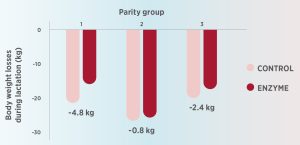
Enzyme supplementation reduces body weight loss during lactation, as shown in a meta-analysis. The average reduction is approximately 3 kg per sow. The effect varies with parity: primiparous sows experience greater reductions in weight loss than multiparous sows.
This difference likely reflects how the extra energy made available through improved digestibility is partitioned: either to support body condition or to support milk production for litter growth.
In addition to enzymes, nutrient efficiency can be further optimised with Rodimeth OH‑methionine). Methionine is not only a building block for proteins but also a key methyl donor, impacting metabolism, antioxidant function, and immunity.
The amount of total sulphur amino acids (TSAA), including methionine are critical for intestinal health and neonatal growth. Data (e.g. Zhang et al., 2015) suggest that standard methionine supply may not always satisfy the requirements of fast‑growing piglets.
Supplementation of TSAA above standard recommendations with OH‑methionine has been reported to increase milk protein and lactose, reduce sow body‑weight loss during lactation, and
elevate antioxidative amino acids in milk; benefits that support both sow condition and offspring via improved milk quality.
Adisseo recognises that efficiently utilising precious nutrients is key to meeting the demands of high‑prolific sows. By combining enzyme solutions, like Rovabio, with Rodimeth and other functional additives, supported by Adisseo’s technical services and formulation tools such as PNE and ADICT, nutritionists can further enhance nutrient utilization and feed efficiency, support sow performance, and reduce feed costs.
Beyond feed safety, feed intake and nutrient utilization, supporting the sow’s immune system is an equally important key lever in holistic sow management. The various stressors our top athletes face – from parturition to lactation – like inflammation, heat stress, and high milk demand will take a toll on their immunity.
An additive known to possess immune modulating properties is FRA® C12 Dry. Supplementation of this additive to gestating and lactating sows improved milk quality by increasing antibody levels in the colostrum ensuring a better maternal immune transfer. Furthermore, better litter performance with higher individual body weights and improved litter weight and homogeneity were observed.
Even after weaning the piglets continued to benefit from the improved immunity indicated by 84% higher (P = 0.049) IgG levels in serum.
In modern sow production, periods of high ambient temperature represent one of the most challenging phases. During summer, heat stress exacerbates oxidative load and pushes sows closer to metabolic imbalance. This makes the peripartum period particularly vulnerable, with consequences for colostrum quality, milk yield, and neonatal vitality.
To better understand how targeted antioxidant support can mitigate these effects, a recent Adisseo trial evaluated dietary supplementation with Selisseo®, a pure source of OHselenium-methionine.
As the most efficient organic selenium source, OH-SeMet is directly incorporated into body proteins as a selenium reserve and serves as a precursor for key selenoproteins involved in antioxidant defence, inflammatory control, and immune function. Through this mode of action, Selisseo® helps maintain antioxidant balance, improves milk quality, and enhances passive immunity transfer to piglets.
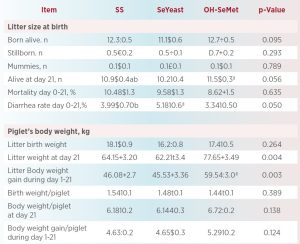
A recent Adisseo trial supplementation of the gestation and lactation diet with selenium-selenite (SS), selenium-yeast, and Selisseo® under summer condition (Temperature-Humidity Index > 75). Selisseo® improved the immune and redox status of sows, leading to reduced oxidative stress and inflammation.
The benefits were directly transferred to the piglets, strengthening their immune defences and resilience. Selisseo® boosted the number of live piglets at birth and weaning, resulting in one more piglet per sow. Moreover, contrary to SS and selenium-yeast, Selisseo®-piglets had
significant higher litter weight.
Adisseo takes a holistic approach, integrating targeted nutrition, health, and management to support optimal sow performance. Ensuring feed safety with Unike® Plus is considered a prerequisite.
Depending on the farm goals, interventions may focus on stimulating feed intake, improving feed efficiency, and/or strengthening overall resilience. This customer-specific strategy ensures that the most appropriate solutions are selected, whether as a single additive or a targeted combination.
Ultimately, the key is enabling modern high-prolific sows to reach their full genetic potential, supporting optimal performance, and helping farms maximise profitability under their specific conditions.
Subscribe now to the technical magazine of animal nutrition
AUTHORS

From 2025 Data to 2026 Decisions: Managing Mycotoxin Risk in a Changing Climate
Alterion® NE Celebrates 10 Years of Poultry Gut Health Innovation
The Science Behind Kolin Plus: Beyond Choline Replacement

Summer Infertility in Sows: Managing Heat Stress and Reproductive Performance
AO-Biotics® Amaferm®: Supporting Livestock Digestion and Performance

Interview with Güner Gövenç
Güner Gövenç,
Net Energy and Precision Feeding Shape the Future of Poultry Nutrition
Edgar Oviedo
Mycotoxins in Swine: Health Risks and Nutritional Solutions
Giuseppe Carcò
Mycotoxins and Piglet Ear Necrosis: Cause, Cofactor or Coincidence?
Alberto Morillo
How Mycotoxins Affect Intestinal Health in Pigs and Poultry
Marcos Rostagno
From Antibiotics to Functional Feeds in Aquaculture
Babatunde Saliu
Peas as an Alternative to Soybean Meal in Beef Cattle Finishing Diets
Daniel Villalba Mata,
Improving Egg Yolk Pigmentation Through Better Nutrient Transport

Aquaculture and Aquaponics Nutrition: How Fish Shape the Growth of Greens
Trenton Corby
Consistency in Soybean Meal Drives Performance and Sustainability