 05 May 2026
Liver health is a critical determinant of productivity and physiological resilience in modern poultry production systems, as the liver plays a central role in nutrient metabolism, detoxification, lipid regulation, and antioxidant defense. Under intensive rearing conditions, broiler chickens are exposed to multiple nutritional, environmental, and metabolic stressors that may compromise hepatic function, ultimately impairing growth performance, feed efficiency, and overall animal welfare. In this context, phytogenic feed additives have gained increasing attention as natural alternatives to synthetic growth promoters, due to their content of bioactive compounds with multiple and complementary modes of action, including antioxidant, anti-inflammatory, and hepatoprotective properties.
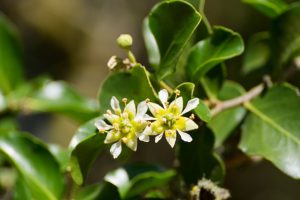
The objective of this study was to evaluate the effects of dietary supplementation with a natural polyherbal mixture (PHM; LivoLiv™, Nuproxa Switzerland Ltd.) containing Solanum nigrum and Phyllanthus niruri, rich in bioactive compounds such as quercetin and rutin, on growth performance and hepatic and lipid-related blood parameters in broiler chickens. The phytogenic compounds present in LivoLiv have been previously associated with the activation of key molecular pathways involved in antioxidant defense including Nrf2, AMPK, as well as with increased activity of antioxidant enzymes such as superoxide dismutase, glutathione peroxidase, and catalase and metabolic regulation through the inhibition of NF-κB, and TGF-β1 pathways.
This trial was conducted at the National Institute of Agricultural Technology (INTA–EEA Pergamino, Argentina) using a total of 540 one-day-old male Cobb 500 broilers, housed in floor pens under commercial conditions. Birds were randomly assigned to a completely randomized block design with three dietary treatments and ten replicates per treatment. The experimental treatments consisted of: (1) a basal control diet (CON), (2) the control diet supplemented with 250 g/t of LivoLiv (Liv250), and (3) the control diet supplemented with 500 g/t of LivoLiv
(Liv500). The experimental period lasted 42 days. Body weight (BW), feed intake (FI), and feed conversion ratio (FCR) were recorded weekly. At 34–35 days of age, blood samples were collected from two birds per replicate for the evaluation of hepatic function indicators and lipid profile.
Data were analyzed by ANOVA and means compared using Fisher’s LSD test (α=0.05). All analyses were performed using InfoSTAT v2020, integrated with mixed model applications and R.
Results showed that dietary supplementation with LivoLiv positively influenced several performance parameters compared to the control group. In particular, broilers fed Liv500 exhibited significantly higher body weight at 28 and 34 days of age, while birds receiving the lower
dose (Liv250) showed improved body weight at earlier growth stages (14 and 28 days). Although no significant differences in final body weight were observed at 42 days, these findings indicate a beneficial effect of the polyherbal supplementation during critical growth phases.
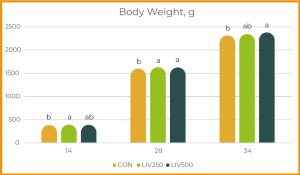
Figure 1: Body weight at different ages (a,b p ≤ 0.05)
Regarding feed efficiency, birds supplemented with Liv250 consistently achieved the lowest FCR throughout the experimental period, outperforming the control group from 14 to 42 days, whereas the Liv500 group showed FCR values comparable to the control. This suggests that the lower inclusion level of LivoLiv may optimize nutrient utilization efficiency.
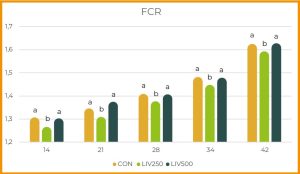
Figure 2: Feed conversion ratio (FCR) at different ages (a,b p ≤ 0.05)
Blood lipid analysis revealed that supplementation with Liv500 significantly increased total lipids, total cholesterol, and both HDL and LDL cholesterol fractions compared to the control group, while supplementation with Liv250 increased only HDL cholesterol. Serum triglyceride concentrations were not affected by dietary treatments. This lipid profile pattern suggests enhanced lipid mobilization and hepatic metabolic activity rather than metabolic dysregulation.
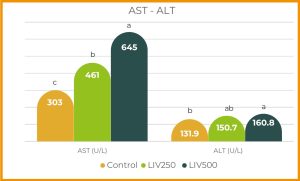
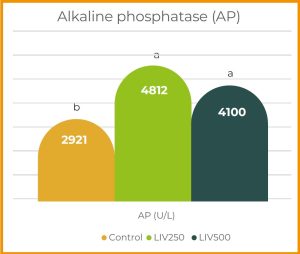
Regarding liver indicators, serum aspartate aminotransferase (AST), alanine aminotransferase (ALT), and alkaline phosphatase (AP) levels were increased in birds fed Liv500, while more moderate effects were observed with the lower dose. Importantly, these enzyme levels remained within physiological reference ranges and were accompanied by increased serum total protein and albumin concentrations, which are indicative of active and efficient hepatic function. These findings support the hypothesis of a metabolic upshift characterized by transient activation of phase I and phase II detoxification pathways, increased bile flow, and enhanced antioxidant enzyme activity. Such adaptive responses may result in temporary elevations of hepatic enzymes without underlying liver pathology, as previously described for phytogenic compounds.
In conclusion, dietary supplementation with the polyherbal product LivoLiv™ improved growth performance and promoted enhanced hepatic
metabolic activity in broiler chickens, supporting better nutrient utilization and physiological resilience. The observed effects are likely mediated by the bioactive phytogenic compounds present in the formulation, particularly quercetin, through their antioxidant and hepatoprotective mechanisms.
Subscribe now to the technical magazine of animal nutrition
AUTHORS
From 2025 Data to 2026 Decisions: Managing Mycotoxin Risk in a Changing Climate

Alterion® NE Celebrates 10 Years of Poultry Gut Health Innovation
The Science Behind Kolin Plus: Beyond Choline Replacement

Summer Infertility in Sows: Managing Heat Stress and Reproductive Performance
AO-Biotics® Amaferm®: Supporting Livestock Digestion and Performance

Interview with Güner Gövenç
Güner Gövenç,
Net Energy and Precision Feeding Shape the Future of Poultry Nutrition
Edgar Oviedo
Mycotoxins in Swine: Health Risks and Nutritional Solutions
Giuseppe Carcò
Mycotoxins and Piglet Ear Necrosis: Cause, Cofactor or Coincidence?
Alberto Morillo
How Mycotoxins Affect Intestinal Health in Pigs and Poultry
Marcos Rostagno
From Antibiotics to Functional Feeds in Aquaculture
Babatunde Saliu
Peas as an Alternative to Soybean Meal in Beef Cattle Finishing Diets
Daniel Villalba Mata,
Improving Egg Yolk Pigmentation Through Better Nutrient Transport

Aquaculture and Aquaponics Nutrition: How Fish Shape the Growth of Greens
Trenton Corby
Consistency in Soybean Meal Drives Performance and Sustainability