 18 Aug 2022
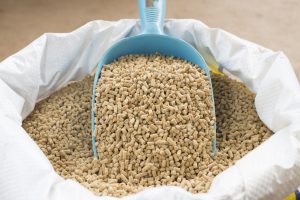
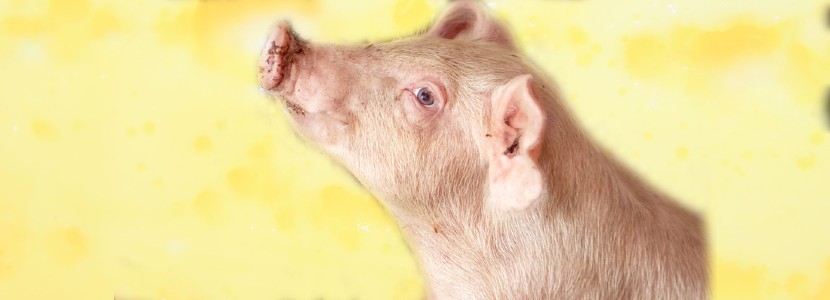
Liquid feeding represents an interesting alternative in pig production. It consists on supplying pigs with aqueous food that is commonly known as “porridge or soup”. This type of feed form is achieved by incorporating water into raw materials.
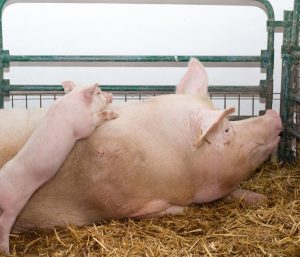
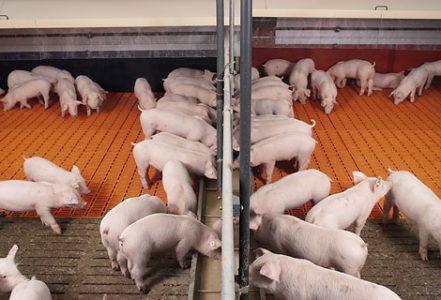
Its use is particularly interesting in weaning piglets and lactating sows, which are considered as the most problematic categories when it comes to feed consumption. This is especially true during the summer. In addition to this, liquid feed decreases the rate of morbidity and mortality in post-weaning piglets. Considering that a transition from milk to liquid feed is less abrupt than directly transitioning to solid feed. In fattening pigs, stock uniformity improves due to an increase in homogeneous DM consumption, resulting in greater live weight at slaughter. In lactating sows, liquid feed contributes to increases in total feed consumption mainly within hot climates.

Depending on the time lapse between the preparation of liquid feed and its consumption, it can be classified as:
Preparation and distribution


Stored feed and ingredients within silos are weighed and moved into a tank where they will be mixed for 2 to 4 minutes with water, through the use of agitators. These are responsible for creating a homogeneous mixture. Then, the prepared feed is propelled towards the feeders through a system of pipes and the use of a pump. At the upper end of the descending pipes there is a valve that regulates and allows feed to fall into the feeders.

Subscribe now to the technical magazine of animal nutrition
AUTHORS
From 2025 Data to 2026 Decisions: Managing Mycotoxin Risk in a Changing Climate
Alterion® NE Celebrates 10 Years of Poultry Gut Health Innovation
The Science Behind Kolin Plus: Beyond Choline Replacement
Summer Infertility in Sows: Managing Heat Stress and Reproductive Performance
AO-Biotics® Amaferm®: Supporting Livestock Digestion and Performance

Interview with Güner Gövenç
Güner Gövenç,
Net Energy and Precision Feeding Shape the Future of Poultry Nutrition
Edgar Oviedo
Mycotoxins in Swine: Health Risks and Nutritional Solutions
Giuseppe Carcò
Mycotoxins and Piglet Ear Necrosis: Cause, Cofactor or Coincidence?
Alberto Morillo
How Mycotoxins Affect Intestinal Health in Pigs and Poultry
Marcos Rostagno
From Antibiotics to Functional Feeds in Aquaculture
Babatunde Saliu
Peas as an Alternative to Soybean Meal in Beef Cattle Finishing Diets
Daniel Villalba Mata,
Improving Egg Yolk Pigmentation Through Better Nutrient Transport

Aquaculture and Aquaponics Nutrition: How Fish Shape the Growth of Greens
Trenton Corby
Consistency in Soybean Meal Drives Performance and Sustainability