 Ashraf Ali
Noticias 04 Nov



Within Brazil, the domestic reaction highlights a deep split. While the powerful, conservative commercial crop lobby overwhelmingly backed Bolsonaro, mainstream technology and input organizations are adopting a highly pragmatic approach.

The global animal protein supply chain is facing a sudden, sharp pivot. Following the narrow election victory of leftist President Luiz Inácio Lula da Silva in Brazil, a dramatic devaluation of the Brazilian Real has triggered an aggressive sell-off across international crop markets.
For poultry and livestock decision-makers, this political shift in South America has quickly transformed from a distant political event into a direct disruption to corporate balance sheets, feed strategies, and global trade flows.
Understanding how these cross-currents filter through regional markets is critical for industry stakeholders planning procurement and market positioning for the upcoming quarters.

Brazil financial market crises: Lula’s state spending forecasts and the currency shock
When the final ballots cleared, showing a tight 51.79% to 48.21% runoff victory for Lula over his conservative rival Flávio Bolsonaro, global markets reacted with immediate fiscal anxiety.
The primary trigger for the market rout was not political ideology, but concrete investor panic regarding Lula’s expansive state spending forecasts.


Before the votes were counted, the leftist leader had already pledged a massive 15% increase in funding for the Bolsa Família welfare program, extensive state-backed credit relief schemes, and subsidies for individual microentrepreneurs.
With Brazil’s public debt already hovering above 80% of GDP, institutional investors feared these unchecked state intervention programs would quickly blow the national fiscal deficit past 8% to 9% of GDP.
The reaction from trading floors was swift: the benchmark Bovespa stock index plummeted by 13.9% in a single day, triggering automatic circuit breakers to halt panic selling.
The Brazilian Real (BRL) suffered a massive currency shock, crashing by up to 12% in spot trading to cross 5.60 per dollar, while the 10-year government bond yield spiked by 2.46 percentage points, driving public borrowing costs to their highest levels in over a decade.

Global animal feed costs correct: CBOT soybean and grain futures plunge
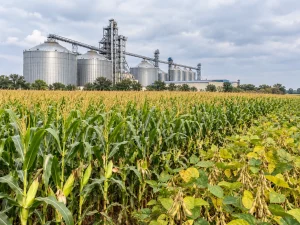
The immediate outcome of a deeply devalued Real was a rapid downward correction in the Chicago Board of Trade (CBOT) grain futures.
Because a weak currency allows Brazilian farmers to receive significantly more Reais for their crops while offering steep discounts to international buyers using US dollars, global buyers immediately rotated away from North American and European supplies.
To protect their competitiveness, global crop markets corrected downward: CBOT soybean futures plunged by 2%, dragging values to a critical two-month low; raw sugar futures erased massive chunks of previous trading value, sliding by 5.6%; and Arabica coffee futures dropped 4%, hitting fresh multi-month pricing floors.
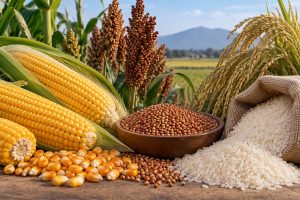
For poultry and livestock producers, who attribute up to 70% of their total live operational costs directly to feed inputs, this market shift provides a critical financial buffer.
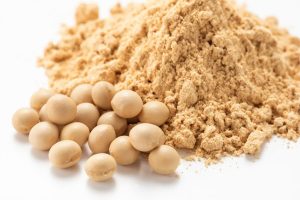
The drop in global crop futures has significantly lowered the cost of high-protein soybean meal and corn components, allowing procurement officers to secure long-term feed hedges at highly attractive entry points.

Geopolitical agricultural trade: Rabobank analysis on trump tariffs and the China grain pivot
The shifting landscape introduces complex geopolitical risks. Carlos Mera, the head of agricultural commodities research at Rabobank, notes that the core vulnerability for global agricultural flows lies in the increasingly tense relationship between Brasília and Washington.
Lula’s left-wing administration shares deep ideological differences with US President Donald Trump, who previously slapped a 25% tariff on primary Brazilian goods.
Carlos Mera explicitly warns that agricultural commodities are increasingly becoming ‘pawns on a geopolitical chessboard,’ stating that the US could impose a fresh wave of aggressive trade restrictions on countries they view as adversarial.
However, this friction is accelerating Brazil’s agricultural alignment with Beijing. Rabobank’s data tracks a major shift: China is actively utilizing cheap, Real-denominated Brazilian soybeans to bypass US grain markets entirely.
By locking in these ultra-cheap inputs, Chinese agribusiness conglomerates are aggressively restocking their domestic swine and poultry feed sectors at a fraction of standard operational costs.
Global meat export dynamics: Brazil’s Newcastle disease outbreak and beef trade flows
While macroeconomics favors cheaper feed, a simultaneous biological challenge has disrupted the poultry sector. Right as the currency crashed, Brazil’s Ministry of Agriculture confirmed a localized outbreak of Newcastle disease in the southern poultry hub of Santa Catarina.
Major international buyers, most notably China and Mexico, moved quickly to enforce strict import bans on Brazilian poultry to protect their domestic flocks. Consequently, instead of a massive wave of cheap Brazilian chicken hitting the global market, a significant volume of product has backed up inside Brazil’s domestic border.
Conversely, Brazil’s beef and pork sectors face no such biological barriers. Free from major sanitary restrictions, Brazilian beef exporters are leveraging their currency advantage to underprice international competitors, aggressively expanding their lead over the US as the world’s dominant beef exporter across Southeast Asia and the Middle East.
South Asian agricultural trade: India’s carabeef exports face currency pressures
The mechanics of this currency shock have triggered unique commercial challenges in South Asia. While India, Pakistan, and Bangladesh operate heavily protected, self-sustaining domestic poultry networks that ban raw chicken imports—shielding local integrators from direct Brazilian poultry competition—the red meat export sector is facing a severe market squeeze.
India is one of the world’s leading exporters of water buffalo meat (carabeef). With the Brazilian Real crashing by 12%, Brazil’s grass-fed commercial beef exports have suddenly become highly cost-competitive against Indian carabeef in USD terms.
Indian export houses are now locked in a fierce margin battle to defend their traditional market share in highly price-sensitive destination hubs across Vietnam, Indonesia, Egypt, and Saudi Arabia, forcing local exporters to absorb compressed margins to keep pace with South American pricing.
Agribusiness regulatory frameworks: The CropLife Brazil post-election mandate
Within Brazil, the domestic reaction highlights a deep split. While the powerful, conservative commercial crop lobby overwhelmingly backed Bolsonaro, mainstream technology and input organizations are adopting a highly pragmatic approach.
Following the election, CropLife Brazil formally congratulated President Lula and issued a strategic policy mandate addressed to the federal government and the National Congress.
Rather than joining the market panic, the organization is actively pushing the administration to protect absolute legal certainty, create robust incentives for bio-technological research, and implement regulatory improvements.
CropLife Brazil argues that maintaining a strong, stable dialogue with the leftist administration is the only way to accelerate the adoption of new field technologies and preserve the global competitiveness of Brazilian agribusiness.





Subscribe now to the technical magazine of animal nutrition
AUTHORS
From 2025 Data to 2026 Decisions: Managing Mycotoxin Risk in a Changing Climate
Alterion® NE Celebrates 10 Years of Poultry Gut Health Innovation

The Science Behind Kolin Plus: Beyond Choline Replacement
Summer Infertility in Sows: Managing Heat Stress and Reproductive Performance
AO-Biotics® Amaferm®: Supporting Livestock Digestion and Performance

Interview with Güner Gövenç
Güner Gövenç,
Net Energy and Precision Feeding Shape the Future of Poultry Nutrition
Edgar Oviedo
Mycotoxins in Swine: Health Risks and Nutritional Solutions
Giuseppe Carcò
Mycotoxins and Piglet Ear Necrosis: Cause, Cofactor or Coincidence?
Alberto Morillo
How Mycotoxins Affect Intestinal Health in Pigs and Poultry
Marcos Rostagno
From Antibiotics to Functional Feeds in Aquaculture
Babatunde Saliu
Peas as an Alternative to Soybean Meal in Beef Cattle Finishing Diets
Daniel Villalba Mata,
Improving Egg Yolk Pigmentation Through Better Nutrient Transport

Aquaculture and Aquaponics Nutrition: How Fish Shape the Growth of Greens
Trenton Corby
Consistency in Soybean Meal Drives Performance and Sustainability