 Ashraf Ali
Noticias 27 Oct






What a warming climate means for poultry, livestock and aquaculture, and why efficiency now has to cover more than output.
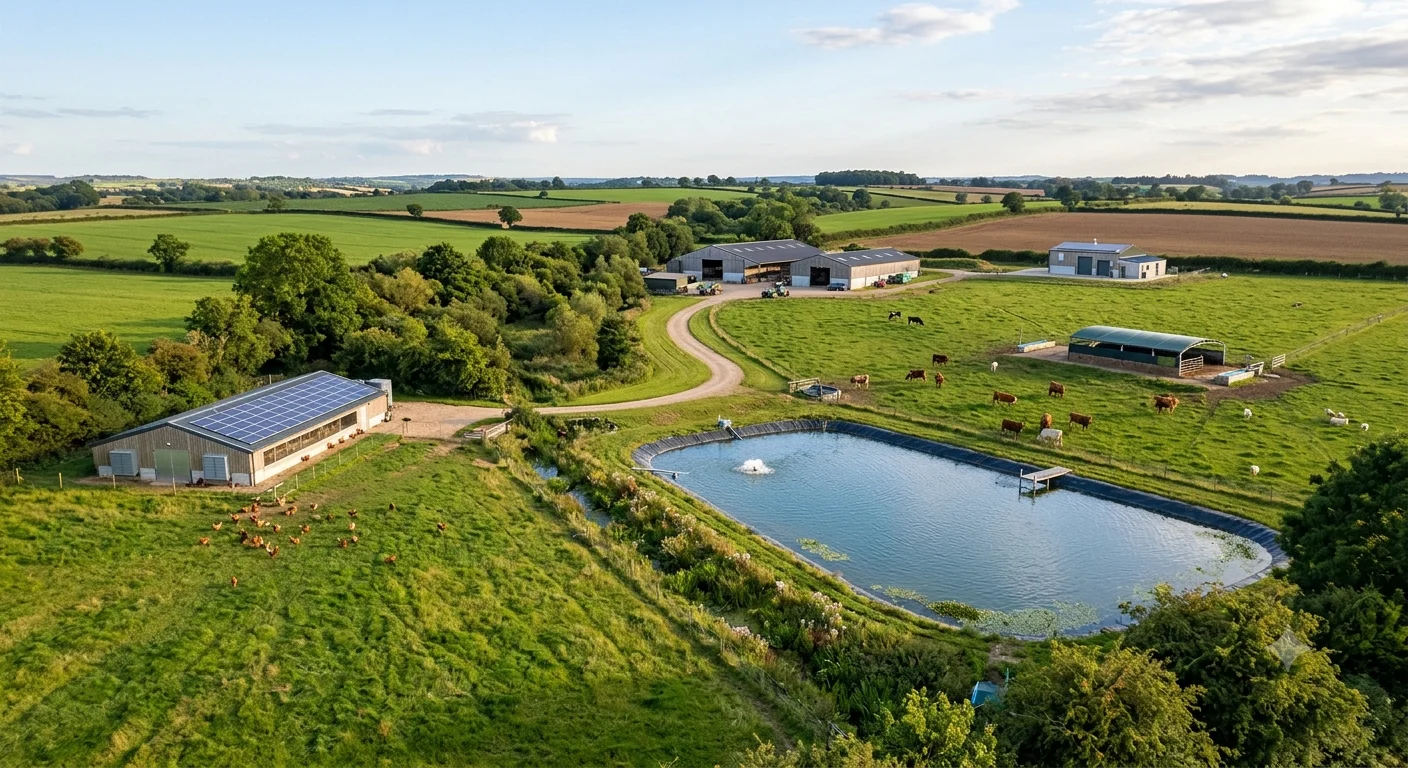
Climate never arrives at the farm as a separate problem. It comes through feed, water, energy and the health of the animals.
Ask anyone in poultry what has changed over the past few decades and the list grows quickly. According to Texas A&M’s Agricultural and Food Policy Center, US broilers needed about 38% less feed per unit of gain in 2021 than in 1955, falling from roughly 3.0 to 1.85 pounds.
Genetics, nutrition and housing have all moved on, and livestock and aquaculture have followed a similar road. We have become very good at turning feed, land, water and labor into food.
That is a real achievement. It is also where the next question starts: how far can production keep rising before it strains the resources it depends on?
Nobody serious is asking whether these industries should continue. They must. Billions of people rely on animal-source foods, and millions of farming families rely on them for a living.
The real issue is what kind of growth we want. More tons of meat, eggs, milk and fish, full stop? Or more food, with enough water, fertile soil and a stable climate left for those who come after us?

The weather outside the house
If you run a feed mill or a broiler operation, a global temperature figure can feel far from the shed. The number 1.43°C will not tell you what is happening to the flock at two in the afternoon. The link is there all the same.
The World Meteorological Organization‘s State of the Global Climate 2025 report confirms that 2015 to 2025 were the eleven warmest years on record.
In 2025 the global surface temperature stood about 1.43°C above the 1850-1900 average, making it the second or third warmest year in a 176-year record, depending on the dataset.
One year above 1.5°C does not mean the Paris Agreement goal has been formally breached, because that is judged over a longer period.
Farmers hardly need a climatologist to explain what a hotter world looks like: birds panting through a heatwave, a crop lost to drought, feed prices jumping after a failed harvest.
Climate never arrives at the farm as a separate problem. It comes through feed, water, energy and the health of the animals.
Responsibility is not shared equally
It is easy to say ‘the world’ caused this. Gases mix in the atmosphere, so the problem is global, but the emissions behind it are unevenly spread.
UNEP’s Emissions Gap Report 2025 puts G20 members, excluding the African Union, at about 77% of global emissions. Looking backwards, UNEP’s 2023 report found that nearly 80% of cumulative historical fossil-fuel and land-use CO2 came from G20 countries, against 4% from the least developed countries.
That matters for India. In absolute terms it is among the largest annual emitters, a result of its population and growing economy. Yet UNEP’s 2023 analysis showed Indian per-capita emissions at under half the world average. History is no license to wait, though. Every country has to do better, and so does every industry, ours included.
The chicken is only part of the story
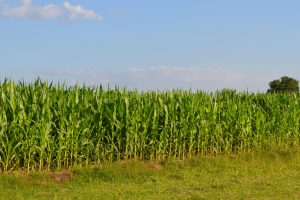
Before a broiler ever enters the house, someone has grown the corn and the soybean. Fertilizer was manufactured, machinery run, water drawn, fuel burned, and the ingredients hauled, stored and milled into feed. After the farm come slaughter, processing, refrigeration and transport. The footprint of animal protein belongs to the whole supply chain, and so do the solutions.
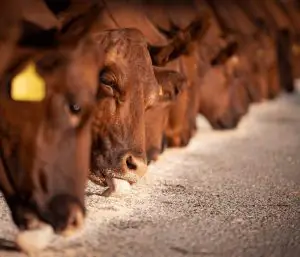
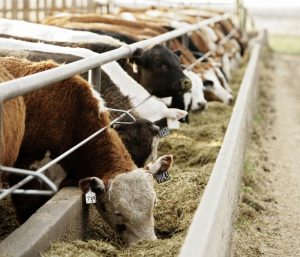
Livestock is a different case. For cattle and other ruminants, methane from digestion is a central concern, with manure adding further emissions. But calling livestock ‘the problem’ is far too simple. It is food, income and employment, and for many families it is savings and security.
The more useful questions are practical ones. Can we improve animal health and fertility? Use feed better? Cut losses? Manage manure properly? Reduce methane without pricing farmers out of business?

What poultry has already shown
Poultry has already shown what efficiency can deliver. Less feed per kilogram of meat benefits the producer, and it can also ease demand for the land, water, fertilizer and energy that feed requires.
How much it helps depends on how the ingredients are grown, moved and replaced, but the principle is hard to dismiss. We have chased better FCR for decades because it pays. It deserves a place in the industry’s climate response too.
Nutrition is where the feed sector can contribute most. A bird has no use for a crude protein figure on a laboratory report. It needs amino acids and other nutrients in the right amounts and balance.
Whatever the animal cannot use is excreted, and for nitrogen that is a real loss. Better amino acid balance and digestibility therefore pay twice: the feed gets more economical, and less nitrogen is wasted.
The same thinking applies to what we throw away. Some agricultural co-products and food-processing by-products make useful feed ingredients, provided safety, quality, consistency and nutritional value hold up. ‘Waste’ is not automatically ‘feed’.
Mycotoxins, contamination and regulation all need checking. But where a suitable co-product can replace part of a conventional ingredient, we make better use of something that already took land, water and energy to produce.
Water carries its own warnings
Aquaculture faces the same conversation with different risks. Fish and shrimp cannot be separated from the water around them, so temperature, oxygen, salinity and water quality decide how they perform.
Warmer water, heavy rain and flooding can all hit growth, health and survival. The sector’s potential is still considerable, but realizing it without damaging the aquatic systems it rests on will take better feed conversion, responsible sourcing, biosecurity and effluent treatment.
The uncomfortable part
We usually talk about wealth as if the story ends at a profit figure. A company produces more, GDP rises and everyone applauds.
But suppose some of that output came from drawing groundwater faster than it refills? Suppose soils are slowly wearing out; biodiversity is quietly disappearing and the bill for extreme weather keeps growing?
None of that appears in the same financial statement. The profit shows up today, the cost shows up years later, and somebody pays it: a farmer facing water shortages, a feed manufacturer coping with dearer raw materials, a consumer paying more at the market, or our children.
So ‘wealth creation’ deserves a second look. If we convert natural capital into financial capital and hand a depleted base to the next generation, have we created wealth at all?
The global numbers offer little comfort. UNEP’s Emissions Gap Report 2025 estimates that full implementation of national pledges would still mean 2.3 to 2.5°C of warming this century. The lower figure assumes that conditional pledges, which depend on outside support, are also met.
Under policies actually in place, the estimate is about 2.8°C. The same report records emissions at a record 57.7 gigatons of CO2 equivalent in 2024, up 2.3% on the year before, a figure repeated in the UN’s Sustainable Development Goals Report 2026.
So, what should we do?
Anyone offering a single answer has probably underestimated the problem. The industry needs hundreds of improvements rather than one miracle.
Poultry, livestock and aquaculture each have their own list, from FCR and cooling to manure, methane and water quality.
For feed companies, precision nutrition has to be taken seriously, because amino acid balance, enzymes and alternative ingredients are part of how the industry uses resources. And every company can start by measuring. We cannot claim production is becoming more sustainable if we do not know our footprint.
Farmers cannot carry this alone. Energy companies, governments, food businesses, consumers and lenders all have parts to play, and countries with greater historical responsibility should help developing economies through the transition.
In India, where food demand is climbing and millions depend on agriculture, telling people to stop growing is no answer. The task is to grow without repeating the most resource-hungry mistakes of the past.
A wider definition of efficiency
Our industry is good at measuring performance. FCR, daily gain, egg numbers, milk yield and survival rates built the modern animal-protein business.
The next set of measures may need to reach further. How much water and land went into that kilogram of meat? How much energy? How much nitrogen was lost? And how much useful nutrition did we get out of everything we put in? That is a wider definition of productivity, and it does not reject the old one.
Genetics, nutrition, housing and health management have all been transformed within living memory, so dramatic change is clearly possible. The next shift should be just as ambitious: producing animal protein without using up what future production depends on.
That is good business as much as good environmental sense. A farm that uses water well is better placed for scarcity. An aquaculture operation that protects water quality protects its own future. Sustainability is less about saving the planet from animal agriculture than about making sure animal agriculture still has a planet to work on.
Which returns us to the opening question. Our children will inherit the farms, factories and knowledge we leave them. They will inherit the water, soil, oceans, biodiversity and climate too.
If the wealth we create today leaves them with less water, poorer soil, fewer species and a hotter planet, can we honestly call it wealth? Or have we simply borrowed it from them?


Subscribe now to the technical magazine of animal nutrition
AUTHORS
From 2025 Data to 2026 Decisions: Managing Mycotoxin Risk in a Changing Climate
Alterion® NE Celebrates 10 Years of Poultry Gut Health Innovation
The Science Behind Kolin Plus: Beyond Choline Replacement
Summer Infertility in Sows: Managing Heat Stress and Reproductive Performance
AO-Biotics® Amaferm®: Supporting Livestock Digestion and Performance

Interview with Güner Gövenç
Güner Gövenç,
Net Energy and Precision Feeding Shape the Future of Poultry Nutrition
Edgar Oviedo
Mycotoxins in Swine: Health Risks and Nutritional Solutions
Giuseppe Carcò
Mycotoxins and Piglet Ear Necrosis: Cause, Cofactor or Coincidence?
Alberto Morillo
How Mycotoxins Affect Intestinal Health in Pigs and Poultry
Marcos Rostagno
From Antibiotics to Functional Feeds in Aquaculture
Babatunde Saliu
Peas as an Alternative to Soybean Meal in Beef Cattle Finishing Diets
Daniel Villalba Mata,
Improving Egg Yolk Pigmentation Through Better Nutrient Transport
Aquaculture and Aquaponics Nutrition: How Fish Shape the Growth of Greens
Trenton Corby
Consistency in Soybean Meal Drives Performance and Sustainability